Al Khan Sharjah Area Guide, UAE – Complete Waterfront Lifestyle, Travel & Restaurant Guide
Al Khan Sharjah is widely recognized as one of the emirate’s most established waterfront districts, combining coastal living with urban convenience. Positioned close to the Sharjah–Dubai border, the area has become a strategic choice for residents, visitors, and daily commuters who want beachside surroundings without losing access to business hubs, airports, and city centers. The neighborhood offers a balanced mix of residential towers, cultural attractions, seaside leisure, and diverse dining options, making it relevant for both lifestyle seekers and travelers exploring Sharjah’s coastal side.
What makes this area especially distinctive is how it merges traditional coastal heritage with modern real estate growth. Over the last decade, major waterfront development projects, hospitality expansion, and tourism activity have reshaped the district into a multifunctional destination. For travelers seeking beach access, families seeking safe residential zones, or food lovers exploring coastal restaurant scenes, this location continues to attract attention across the UAE.
Al Khan Sharjah Area Overview and Local Character
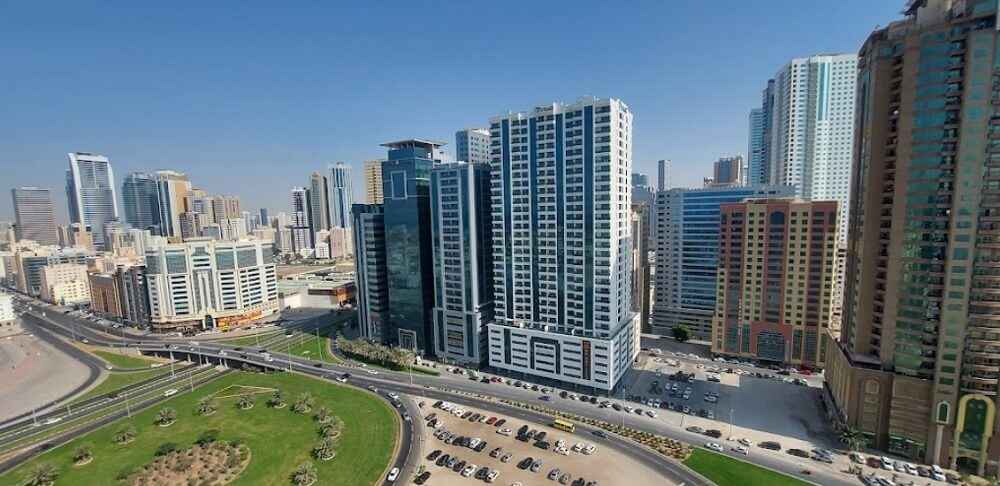
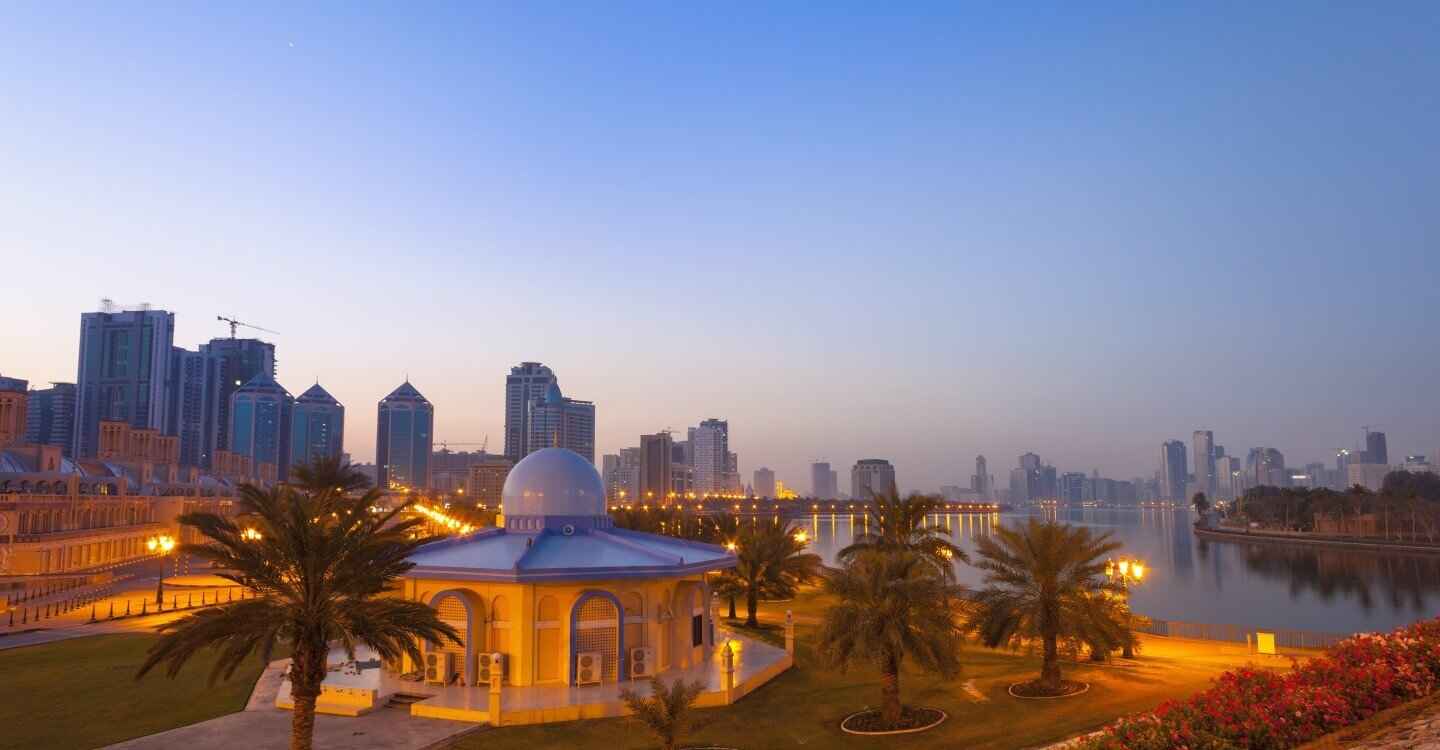
Al Khan sits along the coastline where the lagoon meets the open sea, giving the district a strong maritime identity. The skyline is dominated by residential towers overlooking water views, while ground-level streets feature restaurants, cafés, supermarkets, and essential daily services. The community maintains a busy but organized atmosphere, especially during weekends when beach tourism increases.
The area also plays an important geographic role in Sharjah’s urban layout. It connects several major coastal and residential districts and serves as a transition point between central Sharjah and Dubai’s northern neighborhoods. Because of this positioning, it attracts both long-term residents and short-term visitors staying in nearby hotels or serviced apartments.
Culturally, the district reflects Sharjah’s identity as a heritage-focused emirate. Museums, waterfront promenades, and public leisure spaces reinforce the connection between historical maritime life and modern tourism infrastructure. Seasonal festivals and public events further support community engagement and visitor activity throughout the year.
Al Khan Living, Visiting, and Dining – What to Expect
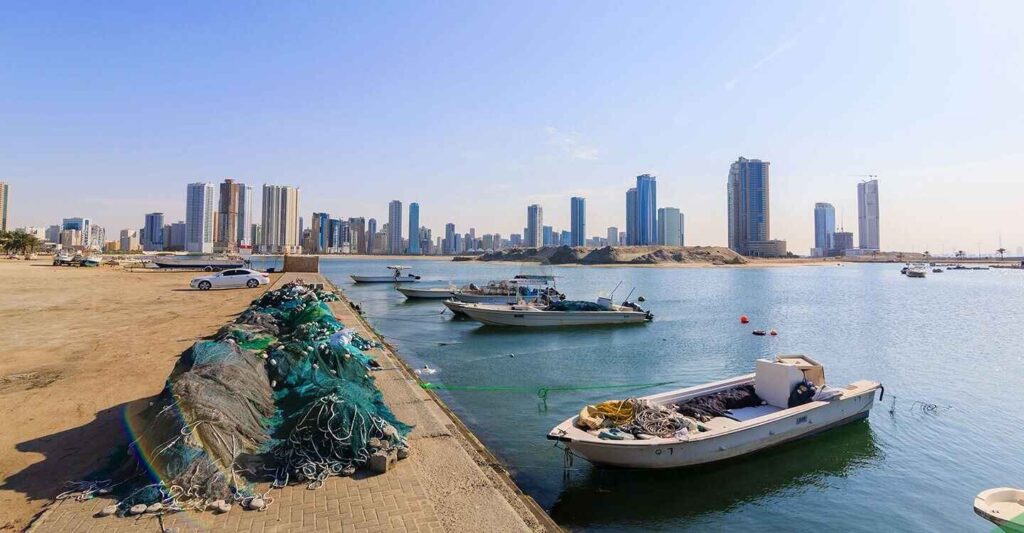
The residential landscape is primarily apartment-based, ranging from affordable studio units to premium waterfront apartments. Many buildings offer sea or lagoon views, which remain a major selling factor. New development zones are introducing modern residential clusters with promenades, retail zones, and hospitality venues, attracting investors and younger families.
From a visitor perspective, the area functions as a lifestyle destination. Beach activities, museums, leisure parks, and canal-side dining experiences provide a full-day itinerary without requiring long travel distances. The restaurant scene is especially diverse, offering Middle Eastern cuisine, South Asian dining, seafood concepts, and casual international cafés. Many restaurants are positioned along waterfront roads or inside hotels, giving diners scenic views alongside food experiences.
For food-focused visitors, this district works best as a relaxed dining destination rather than as a nightlife-oriented entertainment hub. The atmosphere is family-friendly, casual, and culturally aligned with Sharjah’s lifestyle regulations.
Step-by-Step Guide: Planning a Visit to Al Khan
Step 1: Choose the Right Time to Visit
Early morning and sunset hours offer the best coastal weather and less crowd density. Weekend evenings are lively but busier, especially near beaches and waterfront walkways.
Step 2: Start With Waterfront Exploration
Begin with a walk along the beach or lagoon promenade. This allows visitors to understand the layout of the district, locate cafés, and identify activity zones like water sports areas and public leisure spaces.
Step 3: Explore Cultural Attractions
Nearby marine-focused museums and historical exhibits provide educational insight into regional fishing, pearl diving, and maritime trade history. These attractions are indoor and climate-controlled, making them ideal midday stops.
Step 4: Plan a Restaurant Experience
Choose between hotel restaurants, local Arabic cuisine restaurants, or international dining concepts. Waterfront restaurants are popular during evenings because of the views and cooler weather.
Step 5: Combine With Nearby District Visits
Many visitors combine their trip with nearby waterfront destinations.
Restaurant Scene in Al Khan – Food Experience Guide
The restaurant ecosystem here is influenced heavily by tourism, residential demand, and hotel dining culture. Visitors will find traditional Gulf cuisine restaurants, Levant grills, Indian seafood restaurants, and casual cafés serving international menus.
Hotel restaurants remain popular because they combine dining with parking convenience and family-friendly environments. Some restaurants specialize in regional sweets and traditional desserts, attracting evening crowds. Casual dining restaurants dominate roadside locations, serving quick meals, grilled dishes, and seafood platters.
What makes dining unique here is the mix of residents and tourists. During weekdays, restaurants serve local residents and working professionals. On weekends, the crowd shifts toward families, beach visitors, and short-term tourists. This balance keeps restaurant quality competitive and pricing relatively moderate compared to luxury beachfront zones in Dubai.
Transportation, Access, and Connectivity
Road connectivity remains one of the district’s strongest advantages. Major highways connect the area to Dubai, central Sharjah, and industrial zones. Travel time to major airports typically depends on traffic hours, with peak congestion during weekday morning and evening rush hours.
Public transport options exist but are less extensive compared to Dubai. Most residents rely on taxis, ride-hailing services, or private cars. Many residential towers include basement parking, although older buildings may have limited parking availability.
For commuters working in Dubai, selecting residential towers with direct main-road access can significantly reduce daily travel time. This is an important consideration for long-term residents.
Recommended: Sajaa Sharjah
Common Problems and Practical Solutions
One of the main concerns is traffic congestion during peak commuting hours and weekends near beach areas. Choosing alternative routes or adjusting travel time can reduce delays significantly.
Parking availability can also become challenging in older residential buildings. Residents often prioritize buildings with dedicated parking or rent additional parking spaces in nearby structures.
Weekend crowd density near beaches and waterfront promenades can feel overwhelming for some visitors. Visiting early morning or weekday evenings provides a quieter experience.
Another common concern is limited green landscaping compared to suburban districts. Residents usually compensate by visiting nearby parks or waterfront walking tracks.
Expert Tips and Local Best Practices
Choosing a residence or hotel near main access roads improves daily mobility. Buildings slightly away from direct beach traffic often provide quieter living conditions.
For restaurant exploration, weekday evenings offer better service speed and table availability compared to weekend nights.
Families with children often prefer areas closer to schools and clinics rather than beachfront towers due to traffic and parking patterns.
Visitors planning beach activities should check seasonal weather conditions, especially during summer months when humidity levels increase.
Recommended: Clock Tower Sharjah
Key Benefits of Al Khan
The strongest advantage is the waterfront lifestyle at relatively accessible pricing compared to major UAE coastal districts. Residents get beach access, dining variety, and proximity to cultural attractions within a compact geographic zone.
The district also offers strong rental demand and consistent real estate activity, making it attractive for property investors. For visitors, the ability to combine beach relaxation, cultural visits, and restaurant exploration in one location adds convenience.
Families benefit from nearby schools, clinics, and supermarkets, while professionals benefit from cross-emirate connectivity.
FAQs
Is Al Khan Sharjah good for tourists?
Yes, especially for beach access, cultural museums, and casual waterfront dining.
Is the area good for families?
Yes, due to schools, clinics, supermarkets, and safe residential surroundings.
How long is the commute to Dubai?
Usually between 15–30 minutes depending on traffic timing.
Is the restaurant scene good?
Yes, with strong variety across local, regional, and international cuisines.
Is it expensive to live here?
Generally more affordable than Dubai beachfront districts but varies by building and view.
Conclusion
Al Khan Sharjah stands out as a complete coastal district that blends residential convenience, tourism appeal, and strong restaurant culture. Its waterfront positioning, cultural relevance, and connectivity to major UAE urban zones make it one of the most versatile districts in Sharjah.
Whether someone is visiting for beach relaxation, planning long-term residence, or exploring restaurant options near the coastline, the area offers a balanced lifestyle environment. With continued development and tourism growth, the district is expected to maintain strong demand across residential, hospitality, and retail sectors.

- Mafraq Industrial Area Abu Dhabi Area Guide, UAE - March 29, 2026
- Marina Mall Abu Dhabi Guide: Shopping, Dining & Waterfront Experience UAE - March 29, 2026
- Dubailand Area Guide UAE – Lifestyle, Communities, Investment & Living Insights - March 28, 2026