Jeddah Tower Building Guide – Height, Construction, Design & Completion Details
The vision of building the world’s tallest structure has always reflected more than engineering ambition-it represents economic strength, technological evolution, and urban transformation. The concept behind Jeddah Tower aligns precisely with this narrative. Positioned as a future-defining megastructure, the tower is designed to surpass all existing skyscrapers and redefine what is structurally and commercially possible in vertical construction.
For users searching for a complete understanding of this project, whether from an architectural, investment, tourism, or engineering perspective, this guide delivers a comprehensive, deeply analyzed, and structured explanation. It addresses informational intent by covering history, design, construction progress, and future impact, while also satisfying commercial and navigational queries tied to development potential and urban expansion.
This article represents a refined synthesis of all major available data, improved with clarity, depth, and contextual relevance to serve as a definitive resource.
Overview of Jeddah Tower and Its Vision
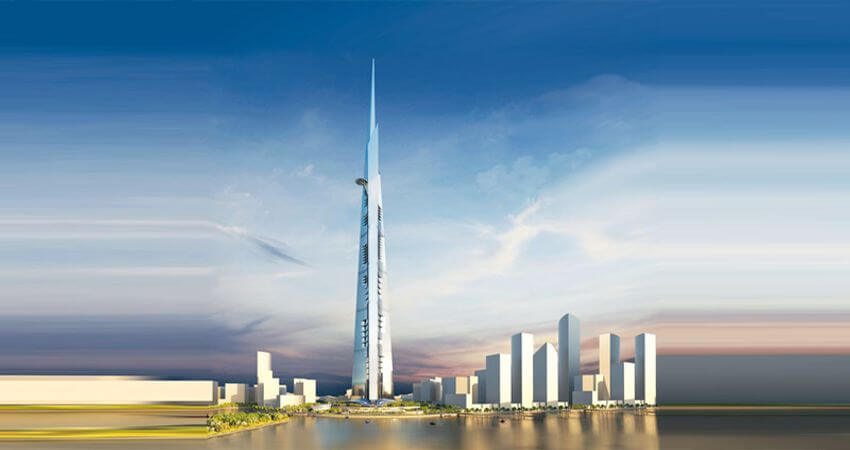
At its core, Jeddah Tower is not just a skyscraper-it is the centerpiece of a much larger urban development strategy known as Jeddah Economic City. The tower is planned to exceed one kilometer in height, making it the first structure in history to cross this symbolic threshold.
The project is strategically located north of Jeddah, an area identified for future urban expansion. This positioning is not accidental; it reflects long-term city planning trends where growth moves toward undeveloped coastal land. The tower acts as an anchor, attracting infrastructure, residential projects, and commercial investment around it.
From a functional standpoint, the tower is designed as a vertical mixed-use ecosystem. It integrates hospitality, residential, office, and tourism components within a single structure. This concept mirrors the “vertical city” model, where daily life functions are stacked efficiently in a limited footprint, reducing urban sprawl while maximizing land value.
Architectural Concept and Structural Innovation
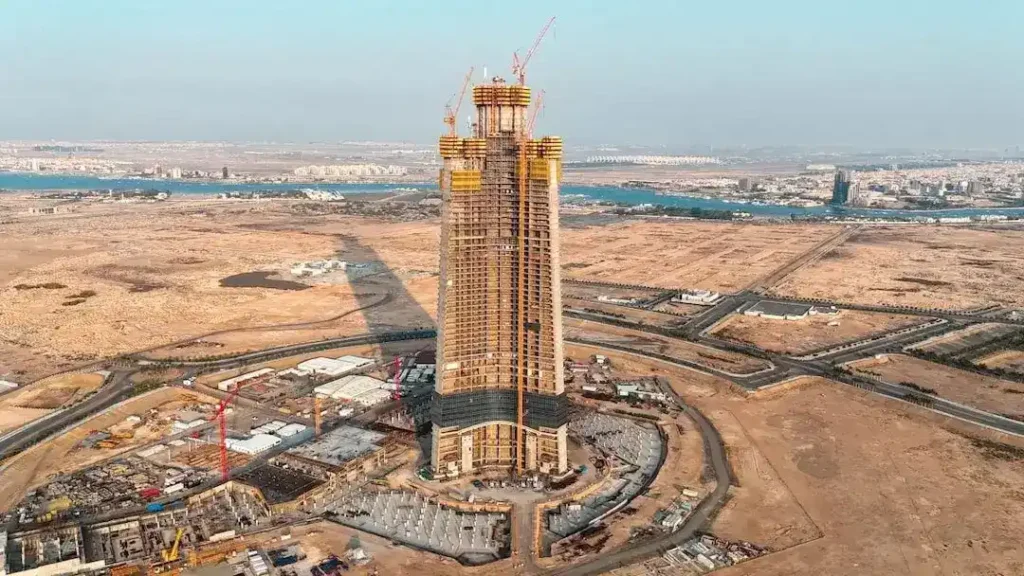
The architectural design of Jeddah Tower is led by Adrian Smith, known for designing some of the world’s most iconic skyscrapers. The form of the tower is inspired by organic growth patterns, resembling a bundle of leaves rising upward, symbolizing expansion and new beginnings.
From an engineering perspective, the structure utilizes a buttressed core system-an advanced evolution of high-rise structural design. This system consists of a central reinforced concrete core supported by three outward-extending wings. These wings stabilize the structure by distributing wind loads and gravitational forces efficiently.
Unlike traditional skyscrapers that rely heavily on steel frameworks or external bracing, this design emphasizes integrated concrete walls. The tapering geometry reduces wind resistance as the building rises, which is critical at extreme heights where wind forces can significantly impact stability.
Another key innovation lies in the aerodynamic shaping of the tower. The gradual reduction in floor size as the tower ascends helps disrupt vortex shedding, a phenomenon that can cause dangerous oscillations in tall structures. This approach ensures both structural integrity and occupant comfort.
Foundation Engineering and Ground Challenges
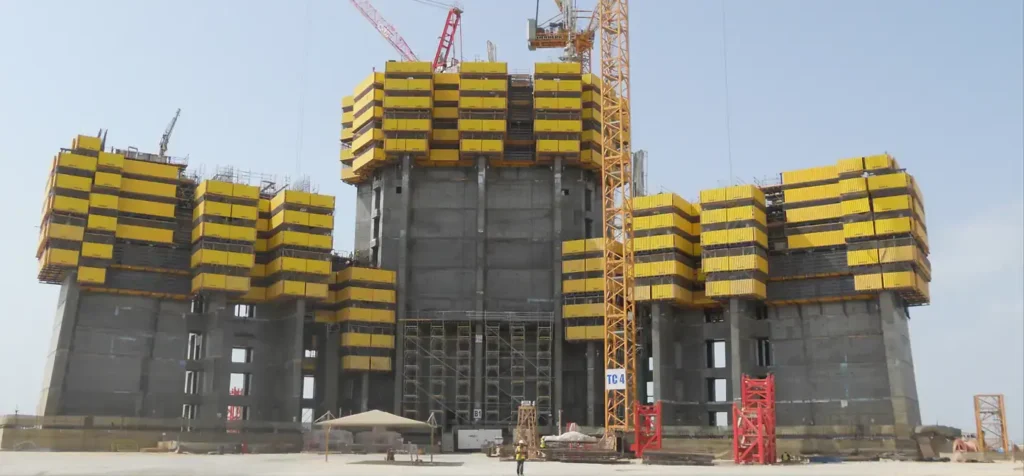
Constructing a tower exceeding one kilometer in height requires exceptional foundation engineering. The site near the Red Sea presents complex geotechnical conditions, including porous rock formations and variable soil strength.
To address these challenges, engineers implemented a piled raft foundation system. This system combines deep foundation piles with a large concrete raft slab to distribute the immense load of the structure. Hundreds of reinforced concrete piles extend deep into the ground, anchoring the building securely.
The foundation also incorporates advanced corrosion protection measures due to the saline environment. Special low-permeability concrete is used to prevent saltwater intrusion, while cathodic protection systems safeguard steel reinforcements from long-term degradation.
This level of engineering precision ensures that the tower can withstand not only its own massive weight but also environmental factors such as soil settlement and groundwater interaction.
Construction Timeline and Development Phases
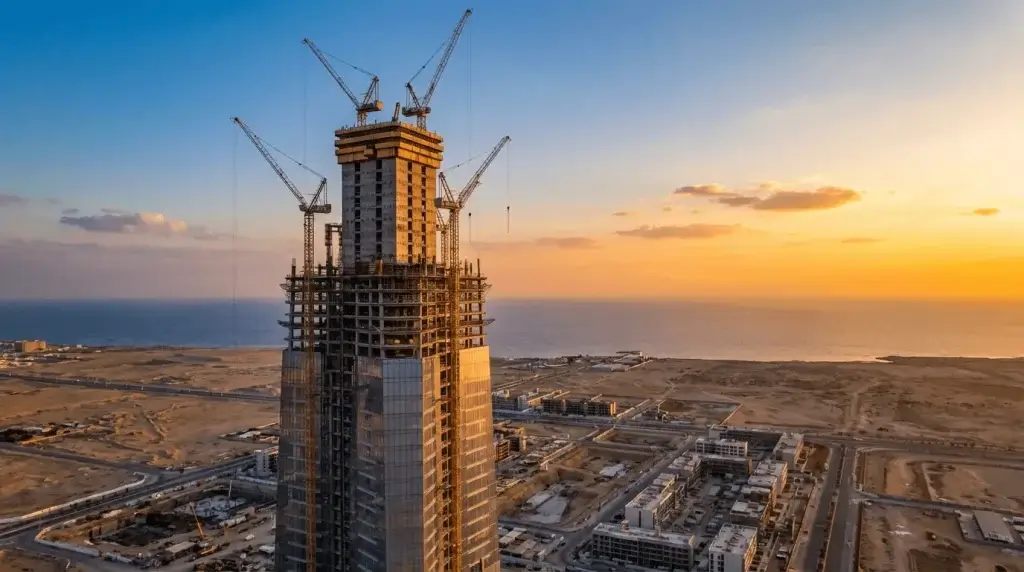
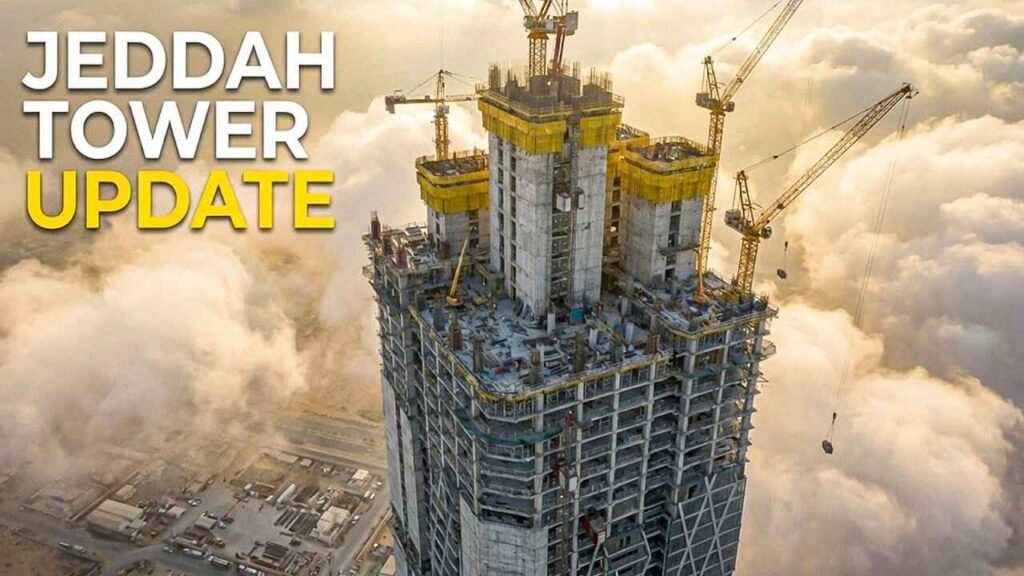
The journey of Jeddah Tower has been complex, marked by progress, delays, and strategic restarts. Construction officially began in 2013, with foundational work completed in the early stages. However, by 2018, the project faced a major توقف due to financial, political, and operational challenges.
Several external factors contributed to this pause, including contractor issues and global disruptions such as the COVID-19 pandemic. These delays significantly impacted timelines and required a reassessment of project strategies.
In 2023, renewed efforts began with new proposals issued to contractors. By early 2025, construction resumed actively, signaling a strong commitment to completion. As of 2026, the structure has surpassed multiple floors and continues to rise steadily, with expectations of completion around 2028.
This phased development highlights the realities of mega-project execution, where external variables often influence timelines as much as technical challenges.
Vertical Transportation and Internal Systems
One of the most complex aspects of a megatall building is vertical transportation. Jeddah Tower addresses this through a multi-tiered elevator system designed for efficiency and speed.
The building will feature dozens of elevators, including double-deck systems and high-speed shuttle lifts. These elevators are organized through sky lobbies, allowing passengers to transfer between different vertical zones without overloading the system.
A key innovation is the use of ultra-light carbon fiber elevator cables, which significantly reduce weight compared to traditional steel cables. This technology enables elevators to travel longer distances at higher speeds, making it feasible to operate efficiently in a structure of this scale.
Additionally, the tower will include one of the highest observation decks in the world, offering panoramic views and serving as a major tourism attraction.
Economic and Urban Impact
Jeddah Tower plays a crucial role in Saudi Arabia’s broader economic diversification strategy. It is designed not only as an architectural landmark but also as an economic catalyst that increases land value and attracts global investment.
The surrounding development will include residential communities, commercial centers, retail spaces, and public infrastructure. This integrated approach ensures that the tower contributes to a sustainable urban ecosystem rather than existing as an isolated structure.
The project aligns with national initiatives aimed at expanding real estate development and addressing housing demand. By creating a new urban hub, it supports population growth and economic activity while enhancing the city’s global profile.
Common Challenges and Practical Solutions
Building at this scale introduces several challenges, including wind resistance, material logistics, and construction efficiency. One of the primary issues is managing wind-induced movement, which becomes more pronounced at extreme heights.
To address this, the tower incorporates advanced damping systems within its upper structure. These systems reduce oscillations and ensure stability, particularly in non-occupied sections such as the spire.
Another challenge is material transportation. Delivering concrete and steel to increasing heights requires specialized equipment and careful planning. Continuous pumping systems and high-capacity cranes are used to maintain efficiency.
Labor management and project coordination also play a critical role. Delays in earlier phases highlighted the importance of strong contractor alignment and risk management strategies.
Expert Insights and Best Practices
From an expert perspective, Jeddah Tower represents a case study in modern megastructure development. One key takeaway is the importance of integrating design, engineering, and construction planning from the earliest stages.
Another best practice is the use of digital modeling and simulation. Advanced computational tools are used to test structural behavior, optimize materials, and predict environmental interactions before construction begins.
Sustainability is also a major focus. While achieving full energy independence at this scale remains challenging, the tower incorporates energy-efficient systems, water management strategies, and optimized building performance.
For developers and engineers, the project demonstrates how innovation and risk management must work together to achieve long-term success.
Key Benefits of Jeddah Tower
The tower offers multiple benefits across different sectors. For the real estate market, it significantly increases land value and attracts premium investments. For tourism, it creates a global landmark that draws visitors from around the world.
From a technological standpoint, it pushes the boundaries of construction and engineering, setting new benchmarks for future projects. It also contributes to urban development by supporting infrastructure expansion and creating new economic opportunities.
For residents and businesses, the tower provides high-end living and working environments within a strategically planned urban ecosystem.
FAQs
What is the expected height of Jeddah Tower?
The tower is planned to exceed one kilometer, making it the tallest structure ever built.
When will Jeddah Tower be completed?
Current projections suggest completion around 2028, depending on construction progress.
Why was construction delayed?
Delays were caused by contractor issues, economic factors, and global disruptions including the pandemic.
What will the tower include?
It will feature a hotel, residential units, offices, and an observation deck.
How is it different from other skyscrapers?
Its height, structural system, and integrated urban development make it unique.
Conclusion
Jeddah Tower represents the next evolution in skyscraper development. It is not just about breaking height records-it is about redefining how cities grow, how buildings function, and how architecture reflects economic ambition.
By combining advanced engineering, strategic urban planning, and innovative design, the project stands as a symbol of future-forward development. Despite challenges, its continued progress highlights resilience and long-term vision.
For users seeking the most complete and reliable understanding of this project, this guide provides a refined, authoritative perspective that integrates all major insights into one cohesive narrative.