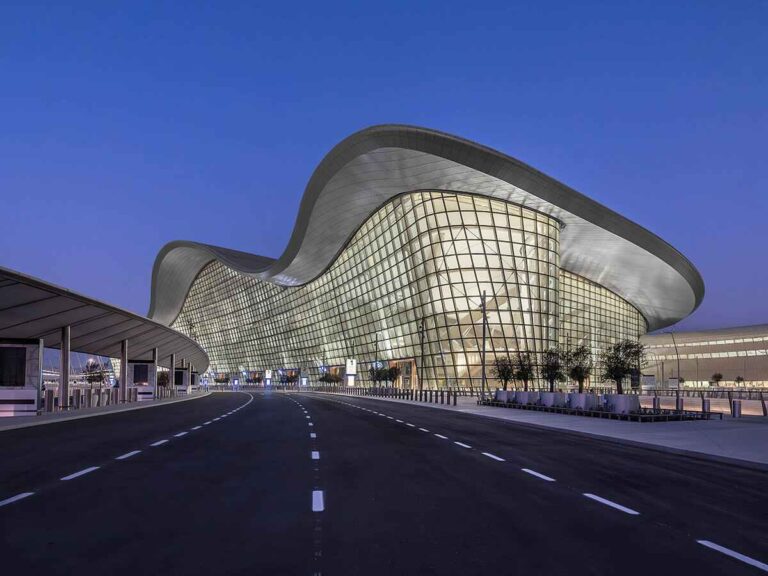
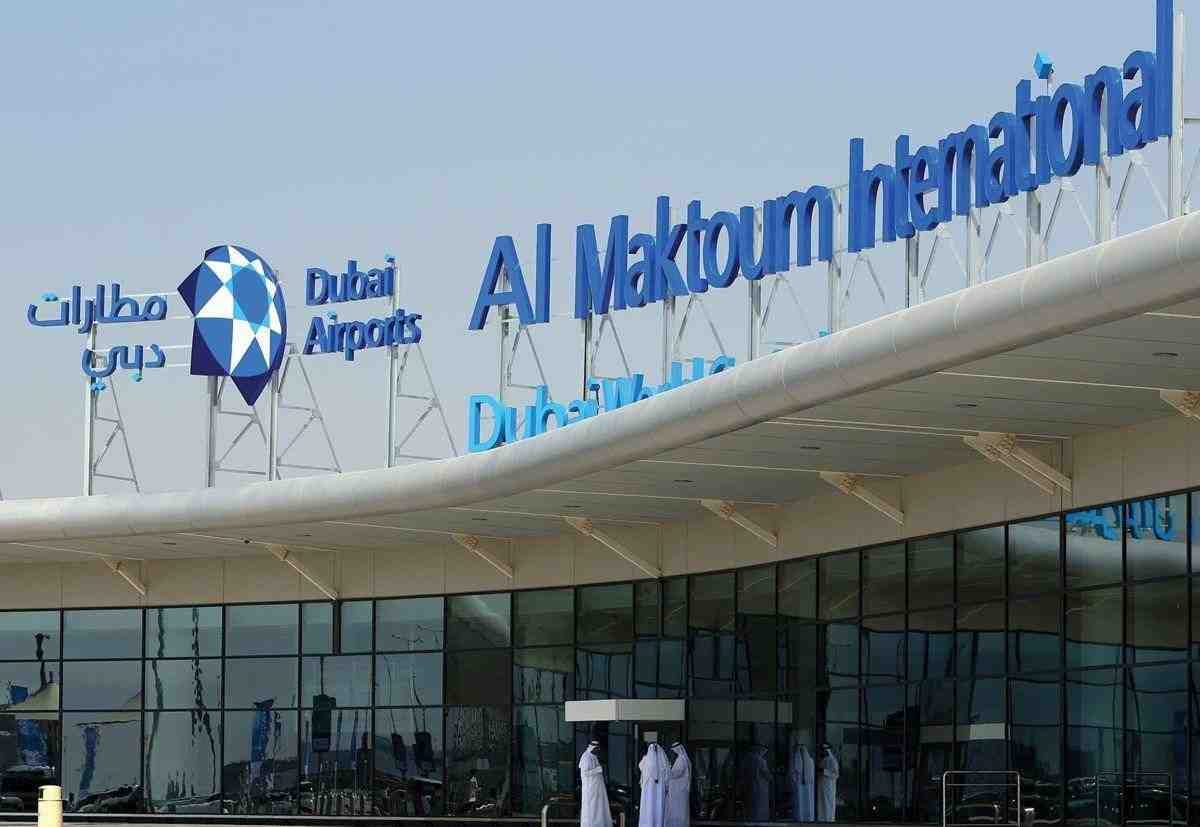
Al Maktoum International Airport: Your Ultimate Real Estate Investment Guide in Dubai South (2026-2032)
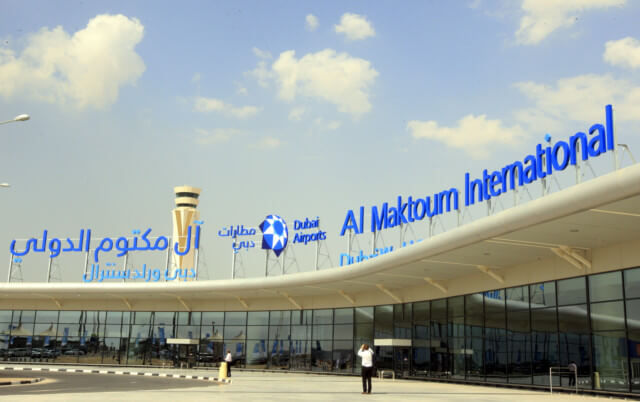
The world’s real estate community has its eye on Dubai, and for good reason. Al Maktoum International Airport (IATA: DWC, ICAO: OMDW), located in Jebel Ali approximately 37 kilometres southwest of Dubai city center, is undergoing an unprecedented expansion that will reshape the emirate’s property investment landscape.
When most investors think of Dubai property opportunities, they envision the glittering towers of Downtown Dubai or the exclusive Palm Jumeirah waterfront. However, savvy investors are now looking further south to Dubai South and Dubai World Central (DWC)-a massive development zone anchored by Al Maktoum International Airport-where property prices remain significantly lower while growth potential stands at historic highs.
This comprehensive guide will show you exactly why purchasing property near Al Maktoum International Airport represents one of the most compelling investment opportunities in the Gulf region for 2026 and beyond.
What Is Al Maktoum International Airport? Understanding Dubai’s Future Aviation Hub
The Airport Basics: Location, History, and Current Operations
Al Maktoum International Airport opened on 27 June 2010 and serves as the main component of Dubai South, a planned residential, commercial and logistics complex. The airport operates under the codes DWC (IATA) and OMDW (ICAO), making it easy to identify for international travelers.
Strategic Location Benefits:
- 37 km southwest of central Dubai
- Direct highway connections: Sheikh Zayed Road (E11), Sheikh Mohammed Bin Zayed Road (E311), and Emirates Road (E611)
- Accessible via public transport: RTA buses and proximity to Ibn Battuta Mall metro station
- Proximity to major zones: Just minutes from Dubai Investment Park and Jebel Ali industrial areas
Unlike some airports developed in isolation, Al Maktoum International Airport sits at the heart of an integrated urban development. The airport is part of Dubai South, a massive 36,000-acre (14,400 hectare) development that will eventually include transport modes, logistics, manufacturing, assembly operations, and value-added services within a single free economic zone.
From Cargo Hub to Global Aviation Leader
When the airport first opened, it initially handled only cargo flights, with passenger services added later. As of recent data, the airport has maintained a focus on freight activity with a limited number of airlines operating passenger services. This controlled growth phase has actually benefited the surrounding real estate market, allowing developments to mature before the major influx of traffic.
The airport was originally named after the House of Maktoum, which rules the Emirate of Dubai, and the total cost of the airport has been estimated at $82 billion.
The $34.85 Billion Expansion: The Game-Changer for Property Investors
Phase 1: 2032 Launch – Setting the Stage
In April 2024, Dubai’s leadership announced a transformative expansion plan that would fundamentally alter the property investment calculus for the entire region. Work on the Al Maktoum International Airport expansion continues according to the approved timeline, with Phase 1 scheduled to begin operations in 2032, featuring contracts worth Dh13 billion currently under execution, while strategic contracts exceeding Dh55 billion are set to be awarded in the next phase.
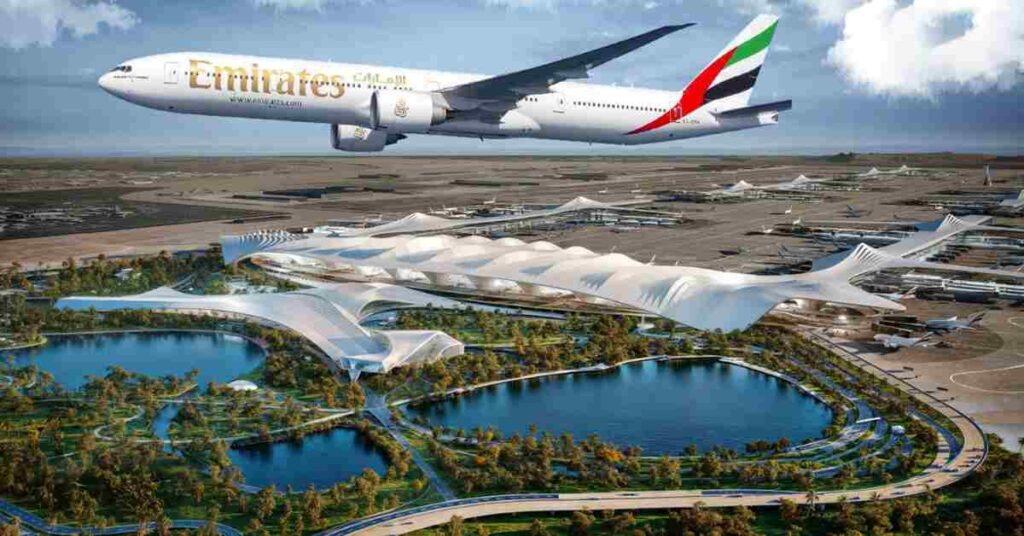
The Final Vision: World’s Largest Airport by 2040
When fully completed, Al Maktoum International Airport will achieve a status unmatched by any airport globally.
Expansion Project Specifications:
Once fully completed, Al Maktoum International Airport will feature five parallel runways operating independently, two passenger terminals and seven concourses connected to more than 430 aircraft stands.
Capacity and Economic Impact:
The airport has a projected annual capacity of 12 million tonnes of freight and between 160 million and 260 million passengers, with Phase 1 expected to accommodate 150 million passengers annually within the next decade.
To put this in perspective:
- Current Dubai International: ~87 million passengers/year
- Al Maktoum Phase 1: ~150 million passengers/year
- Al Maktoum Full Capacity: ~260 million passengers/year (5x larger than current Dubai International)
Economic Vision: Dubai D33 Integration
Sheikh Hamdan bin Mohammed bin Rashid Al Maktoum, Crown Prince of Dubai, stated that “the Al Maktoum International Airport project will expand the aviation sector’s capacity and enhance the efficiency of the emirate’s transport and logistics ecosystem,” supporting Dubai’s long-term economic strategy.
This isn’t just infrastructure development—it’s economic transformation aligned with Dubai’s ambitious D33 Economic Agenda and 2040 Urban Master Plan.
Dubai South: The Residential Hub Within Dubai World Central
Understanding Dubai World Central (DWC)
Dubai South isn’t a standalone neighborhood—it’s the residential and commercial core of the broader Dubai World Central master development. Dubai World Central is a planned residential, commercial and logistics complex that will eventually cover an area of 36,000 acres, making it larger than the entire city of Abu Dhabi.
Why Dubai South Properties Are Different
Unlike traditional Dubai neighborhoods, Dubai South offers several unique characteristics that make it exceptional for property investors:
1. Freehold Ownership Without Sponsor Requirements Dubai South is classified as a freehold zone. All nationalities can buy properties with full freehold ownership and standard DLD registration with no UAE sponsor required. This removes a major barrier for international investors who historically required local partners.
2. Significantly Lower Entry Prices Property near Al Maktoum International Airport remains significantly more affordable than established Dubai neighborhoods. The average price per square foot for Dubai South properties stands at around AED 1,085 per sq ft, lower than the Dubai average of AED 1,689, offering more space for less cost.
3. Tax-Efficient Investment Environment Dubai does not impose annual property tax, capital gains tax, or tax on residential rental income, making net returns among the highest globally.
Current Market Pricing in Dubai South (2026)
Understanding current price points helps assess both entry costs and appreciation potential:
Studio Apartments:
- Average Price: AED 590,000 ($160,000 USD)
- Size: 340-450 square feet
- Ideal for: Investor yields, young professionals
One-Bedroom Apartments:
- Average Price: AED 1.1 million ($300,000 USD)
- Size: 700-1,000 square feet
- Ideal for: First-time homebuyers, young families
Two-Bedroom Apartments:
- Average Price: AED 1.2 million ($327,000 USD)
- Growing demand from expanding workforce
- Strong rental yields
Townhouses:
- Average Price: AED 3 million ($816,000 USD)
- Include private gardens and parking
- Appeal to families and luxury investors
Villas:
- Average Price: AED 4.3 million ($1.17 million USD)
- Up to 7-bedrooms available
- Strong long-term appreciation potential
Recent Market Performance: 36.4% Growth
Dubai South property sales have surged 36.4 per cent since February 2026 as investors back Dubai World Central’s expansion into the world’s largest airport. This remarkable growth rate demonstrates the market’s confidence in the region’s future.
To contextualize: the overall Dubai market growth rate in 2026 was approximately 4.3% quarterly. Dubai South’s growth rate 8x the broader market rate—a clear signal of investor recognition.
Airport Expansion Impact: How Al Maktoum Development Drives Property Values
The Economic Multiplier Effect
The airport is being developed to become the world’s largest aviation hub, with annual capacity of more than 260 million passengers and 12 million tonnes of air cargo once its final phase is completed, supporting Dubai’s long-term economic growth.
When major infrastructure opens, property values in surrounding areas don’t just increase linearly—they experience multiplicative growth driven by:
Job Creation: The airport expansion will directly create thousands of jobs in:
- Aviation and airline operations
- Logistics and cargo handling
- Hospitality and concierge services
- Retail and F&B operations
- Security and ground services
- Maintenance and technical roles
- Commercial services (banking, law, accounting)
Business Attraction: With 430 aircraft gates and massive cargo capacity, companies relocating their regional hubs to Dubai will seek office space and worker accommodations near the airport, driving commercial development and rental demand.
Population Growth: Dubai’s population is expected to reach 6 million by 2030, with continuous influx of qualified professionals and expatriates fueling ongoing demand for rental properties.
Airport Proximity Premium
Real estate economics 101: properties near major transportation hubs command premium pricing and higher rental yields. Al Maktoum International Airport properties offer:
- 5-10 minute drive to the airport terminal
- Reduced relocation costs for airport employees
- Time savings for frequent business travelers
- Logistics efficiency for cargo-dependent businesses
Historical Precedent: Dubai International Success
Dubai International Airport, opened in 1960, catalyzed the development of surrounding areas into some of Dubai’s most valuable real estate. The progression went:
- Airport built → 2. Residential growth → 3. Commercial expansion → 4. Premium positioning
Al Maktoum International Airport will follow the same trajectory, but at a far larger scale.
Property Investment Opportunities in Dubai South: The Complete Breakdown
Investment Strategy #1: Off-Plan Properties for Capital Appreciation
Off-plan properties in Dubai South represent the highest potential return strategy for investors with 5+ year horizons.
Why Off-Plan?
- 30-40% discount to completed units in the same developments
- Flexible payment plans: Often structured as 1-2% monthly starting only after handover
- Customization options: Select finishes and unit configurations
- Construction risk hedge: Reputable developers backing projects
Major Off-Plan Projects in Dubai South:
Major off-plan projects in Dubai South include EMAAR South, The Pulse, South Bay, Azizi Venice, MAG 5 Boulevard, and various residential districts with townhouses up to 7-bedroom villas with full freehold ownership.
Expected Appreciation Timeline:
- Construction Phase (Years 1-3): Limited appreciation, focus on payment efficiency
- Completion Phase (Years 3-5): 15-25% appreciation as project nears completion
- Post-Opening (Years 5+): 25-50%+ appreciation driven by airport operations ramp-up
Investment Strategy #2: Rental Income Focus with Immediate Returns
For investors prioritizing cash flow over appreciation, ready properties in Dubai South offer immediate income generation.
Rental Yield Projections:
Dubai South offers 6–8% rental yields with strong long-term growth driven by Al Maktoum Airport expansion and Expo City Dubai proximity.
In some premium locations and micromarkets within Dubai South, rental yields can exceed 22% annually, mainly for well-located, high-quality units.
Target Renters:
- Airport employees: Perfect for 3-6 month contract workers
- Airline crew members: Need accommodation near aviation hub
- Business travelers: Executives with recurring visits to Dubai
- Logistics workers: Growing sector requiring affordable housing
- Expat families: Relocating to Dubai for employment
Portfolio Diversification: Ready properties allow immediate positive cash flow while off-plan units appreciate, creating a balanced portfolio approach.
Investment Strategy #3: Golden Visa Property Investment
Foreign buyers can acquire full ownership of properties in approved freehold areas in Dubai without requiring a visa or local sponsor. A qualifying Dubai property investment of AED 2 million can support a 10-year Golden Visa.
Golden Visa Benefits:
- 10-year residence visa for investor and immediate family
- No visa run requirements
- Work permit eligibility for family members
- Business license facilitation for entrepreneurs
- UAE bank account access without residency restrictions
Dubai South projects offer both Golden Visa-qualifying investments and smaller entry-point properties:
- AED 750,000 investment: 2-year residence visa
- AED 2 million investment: 10-year residence visa
Location Analysis: Connectivity and Accessibility to Key Dubai Zones
Transportation Advantages
Understanding Al Maktoum International Airport’s location within Dubai’s broader geography is crucial for renters and property appreciation.
Distance to Key Zones:
Al Maktoum International Airport is easily accessible from all three of Dubai’s main multi-lane arterial roads, including Sheikh Zayed Road (E11), Sheikh Mohammed Bin Zayed Road (E311) as well as Emirates Road (E611), with well-developed access roads leading to the airport.
Travel Times from Dubai South:
- To Expo City Dubai: 5-10 minutes (major economic zone)
- To Dubai Investment Park: 20 minutes (logistics hub)
- To Dubai Marina: 25-30 minutes (entertainment, dining, nightlife)
- To Downtown Dubai: 35-45 minutes (business, shopping, tourism)
- To Jebel Ali Free Zone: 10-15 minutes (industrial/commercial hub)
Public Transportation Integration
Al Maktoum International Airport is linked to the city by buses and taxis operated by the Roads and Transports Authority (RTA), with the nearest metro station located at Ibn Battuta Mall.
Current & Future Transportation:
- RTA Buses: Lines DS1, F55, F56 connect Dubai South to Expo City and metro stations
- Metro Expansion: Planned metro extensions will eventually reach Jebel Ali area
- Automated People Mover: Plans include an integrated Automated People Mover system and multimodal connectivity linking air, rail and road transport networks
Proximity to Major Economic Zones
Dubai South’s location near multiple economic hubs creates diverse job opportunities:
Dubai Investment Park: Major commercial and logistics center hosting multinational corporations, research facilities, and tech companies.
Jebel Ali Industrial Zone: One of the world’s largest free zones hosting manufacturing, assembly, and distribution operations.
Expo City Dubai: Post-Expo 2020 permanent entertainment and commercial venue generating ongoing tourism and employment.
Arabian Ranches 3 & Community: Planned residential area nearby attracting families and lifestyle-focused buyers.
Rental Yields and ROI Analysis: Numbers That Drive Investment Decisions
Understanding Rental Yield Potential
Rental Yield Formula: Annual Rental Income ÷ Property Purchase Price = Annual Yield %
For example:
- Property Price: AED 1 million
- Annual Rent: AED 70,000
- Annual Yield: 7% (AED 70,000 ÷ AED 1 million)
Dubai South Rental Comparisons:
Investors continue to choose Dubai’s property market for its tax-efficient environment, with an average rental yield for residential properties in Dubai of 6.31%.
Comparative Yields by Location:
- Downtown Dubai: 4-5% (premium location, higher prices)
- Dubai Marina: 5-6% (waterfront command premium)
- Dubai Hills Estate: 5-6% (family-focused, lower yields)
- Dubai South: 6-8%+ (emerging area, growth potential)
- JVC: 6-7% (affordable, moderate yields)
Total Return on Investment (Capital Appreciation + Rental Yield)
Smart investors consider both income and appreciation:
Conservative Scenario (6-year holding period):
- Initial investment: AED 1 million (apartment)
- Annual rental yield: 7% (AED 70,000/year × 6 = AED 420,000)
- Capital appreciation: 20% (AED 200,000)
- Total return: AED 620,000 profit (62% ROI)
- Annualized return: ~10.3% per year
Growth Scenario (with airport expansion momentum):
- Initial investment: AED 1 million (apartment)
- Annual rental yield: 7.5% (AED 75,000/year × 6 = AED 450,000)
- Capital appreciation: 40% (driven by airport expansion)
- Total return: AED 850,000 profit (85% ROI)
- Annualized return: ~14.2% per year
The Dubai property market of 2026 offers world investors unique value in terms of guaranteed returns, tax efficiency and long-term wealth-generation, with zero income tax and capital gains tax with high rental yields, population increase and investor friendly policies.
Tax Efficiency Advantage
The absence of property taxes dramatically increases net returns:
Comparison: Dubai vs. Traditional Markets
- Dubai: 7% yield = 7% net to investor (zero taxes)
- USA: 7% yield = 4.5-5.5% net (after income and capital gains taxes)
- UK: 7% yield = 4.5-5% net (stamp duty, income tax)
- Singapore: 7% yield = 5-5.5% net (progressive income tax)
Dubai’s tax advantage can add 2-3% annual returns compared to developed markets.
Top Developments in Dubai South: Project Analysis and Buyer Guide
EMAAR South: Master-Planned Community
EMAAR (Emaar Properties), Dubai’s leading developer, anchors Dubai South with EMAAR South—a 500+ hectare master community.
Key Features:
- Golf course central amenity
- Multiple residential neighborhoods (Arabic, European, Asian-inspired architecture)
- Mixed-use commercial zones
- Schools, hospitals, retail centers
- 15,000+ expected residents
Property Types: Studios through 4-bedroom apartments, townhouses, and villas
Target Investor: Family-focused, lifestyle buyers seeking established developer reputation
Azizi Venice: Italian-Inspired Waterfront
Azizi Developments brings European charm to Dubai South.
Key Features:
- Venetian-inspired architecture and canals
- Waterfront living with boat access
- 800+ units across towers and townhouses
- Retail and dining promenade
- 25,000 sqm retail space
Property Types: Studios through 3-bedroom apartments
Target Investor: Lifestyle buyers, investors seeking unique positioning, luxury segment
The Pulse: Mixed-Use Urban Living
The Pulse represents modern, integrated community living with residential, commercial, and entertainment zones.
Key Features:
- Central plaza and gathering spaces
- Co-working spaces (work/live flexibility)
- Retail and F&B outlets
- Tech-forward infrastructure
- Pet-friendly amenities
Property Types: Studios through 2-bedroom apartments, lofts
Target Investor: Young professionals, digital nomads, remote workers
South Bay: Waterfront Residential
Positioned near water features within Dubai South.
Key Features:
- Waterfront location within development
- Mid-range pricing sweet spot
- Parks and recreational areas
- Community facilities
- Growing demand from families
Property Types: 1-3 bedroom apartments, some townhouses
Target Investor: Families, medium-term investors seeking balance
MAG 5 Boulevard: Mixed-Use Development
Taking inspiration from global boulevard concepts.
Key Features:
- Central promenade and community spaces
- Retail and commercial ground floors
- Diverse architectural styles
- Green spaces and landscaping
- Educational facilities nearby
Property Types: Mix of studios and larger units
Target Investor: Investors seeking diverse community feel
Investment Strategy and Golden Visa Benefits: Complete Framework
The Case for Investing Near Al Maktoum International Airport
Sheikh Ahmed bin Saeed Al Maktoum, Chairman of Dubai Airports, confirmed that “Al Maktoum International Airport is one of the most significant strategic projects shaping Dubai’s economic future,” embodying leadership’s long-term vision of investing in world-class infrastructure.
Five-Year Investment Plan for Dubai South
Year 1-2: Entry Phase
- Purchase off-plan property at market discount (typically 30-40% discount)
- Flexible payment plans minimize capital outlay
- Begin building position while prices remain accessible
- Network with fellow investors and developers
Year 2-3: Construction Phase
- Monitor project completion milestones
- Refinance options becoming available
- Begin planning management strategy (self-manage vs. PM company)
- Consider second purchase as portfolio expands
Year 3-5: Completion Phase
- Property hands over, rental income begins
- Capital appreciation accelerates (15-25%)
- Airport expansion progress evident in local news and development activity
- Decision point: hold for longer appreciation or execute partial exit
Year 5+: Growth Realization Phase
- Airport operations beginning Phase 1 ramp-up (estimated 2032)
- Significant capital appreciation (25-50%+ realized)
- Established rental income stream
- Option to hold for full runway or realize gains
Optimal Portfolio Construction
Conservative Investor (Risk-Averse, Income-Focused):
- 60% ready properties (immediate rental yield)
- 40% off-plan properties (long-term appreciation)
- Expected return: 7-9% annually
- Minimal volatility, consistent income
Balanced Investor (Moderate Risk, Income + Growth):
- 40% ready properties
- 60% off-plan properties
- Expected return: 10-13% annually
- Moderate growth trajectory, regular income
Growth Investor (Higher Risk Tolerance, Appreciation-Focused):
- 20% ready properties (cash flow stability)
- 80% off-plan properties (maximum appreciation)
- Expected return: 13-18% annually
- Higher volatility, maximum growth potential
Market Trends and Future Outlook: What’s Ahead for Dubai South
Demographic Tailwinds Supporting Property Demand
The city continues to grow actively, with the population expected to reach 6 million by 2030, and the constant influx of qualified professionals and expatriates fueling ongoing demand for rental properties.
Population Growth Implications:
- Housing Shortage: Dubai’s rapid growth will outpace housing supply
- Wage Inflation: Higher salaries attract more professionals
- Service Expansion: More restaurants, shopping, entertainment venues
- Infrastructure Investment: Roads, utilities, schools, hospitals
- Property Appreciation: Supply constraints drive value growth
Economic Growth Drivers Beyond Aviation
While Al Maktoum International Airport represents the flagship project, Dubai’s diversified economy focuses on tourism, trade, logistics, finance, technology, and professional services, with long-term initiatives such as the Dubai Economic Agenda D33 and Dubai 2040 Urban Master Plan continuing to support economic growth.
D33 Agenda Priorities (Triple Dubai by 2033):
- Triple the Economy: AED 2+ trillion GDP target
- Investment in Logistics: Al Maktoum Airport crucial to this strategy
- Tech Hub Development: Attracting global tech companies and talent
- Green Infrastructure: Sustainability focus increases desirability
- Quality of Life: Amenities and lifestyle improvements
Market Sentiment: Investor Confidence Metrics
Dubai recorded 66,900 residential property sales worth AED196.2bn ($53.4bn) in 2026, with off-plan homes accounting for 74 per cent of deals. This demonstrates strong investor confidence in Dubai’s future, with off-plan purchases (higher risk, higher reward) dominating transaction volumes.
Dubai South property sales have surged 36.4 per cent since February 2026 as investors back Dubai World Central’s expansion, indicating accelerating investor interest in the specific Dubai South/Al Maktoum corridor.
Projected Price Appreciation by Timeline
Conservative Projection:
- 2026: AED 1 million baseline
- 2028: AED 1.12 million (+12%)
- 2030: AED 1.27 million (+27%)
- 2032: AED 1.45 million (+45%)
- 2035: AED 1.68 million (+68%)
Growth Projection (with acceleration factors):
- 2026: AED 1 million baseline
- 2028: AED 1.18 million (+18%)
- 2030: AED 1.42 million (+42%)
- 2032: AED 1.78 million (+78%)
- 2035: AED 2.35 million (+135%)
Variables affecting actual appreciation:
- Airport expansion execution pace
- Global economic conditions
- Oil price movements (secondary effect)
- Interest rates and financing availability
- Real estate regulatory changes
FAQs
Q: Is It Safe to Invest in Dubai South Given the Distance from Downtown?
A: Distance is actually an advantage. Dubai South’s location 37 km from the city center means:
- Lower entry prices (30-40% cheaper than central Dubai)
- Higher rental yields (6-8% vs. 4-5% downtown)
- Less saturated market (still finding investors)
- Future proximity benefit (as population grows outward)
The concept of “distance” is becoming obsolete as Dubai expands. Properties currently considered “far” will become centrally located within a decade. Early investors benefit from this outward expansion trend.
Q: What Happens to Property Values When the Airport Opens in 2032?
A: Expect acceleration of existing appreciation trends, not shock revaluation:
Before 2032: Steady appreciation (8-15% annually) driven by:
- Pre-opening infrastructure development
- Growing investor interest
- Job creation in supporting industries
- Population relocating to Dubai South
2032 Opening: Notable boost to appreciation (15-25% annually)
- Actual operations begin
- Employee housing demand materializes
- Commercial development accelerates
- Media coverage and international attention
2032-2035: Normalization (10-15% annually)
- Market adjusts to new normal
- Competition from new developments
- But sustained growth from economic integration
Early investors (2026) benefit most from the entire appreciation arc.
Q: Can I Get a Golden Visa by Investing in Dubai South?
A: Yes. A qualifying Dubai property investment of AED 2 million can support a 10-year Golden Visa, subject to current rules and documentation.
Investment Amounts:
- AED 750,000: 2-year residence visa
- AED 2,000,000: 10-year residence visa
Process:
- Purchase property (off-plan or ready)
- Register property with DLD (Dubai Land Department)
- Submit Golden Visa application with documentation
- Approval typically within 4-6 weeks
- Visa granted for specified period
Family Coverage:
- Visa holder’s spouse
- Children up to age 21
- In some cases, parents
Q: What Are Realistic Rental Yields for Dubai South Properties?
A: Dubai South offers 6–8% rental yields with strong long-term growth driven by Al Maktoum Airport expansion, though some micro-markets achieve higher returns.
Yield Calculation Example:
- Property price: AED 1 million
- Annual rent (1BR): AED 65,000-75,000
- Annual yield: 6.5-7.5%
Factors Affecting Yields:
- Property type (studios typically 7-8%, larger units 5-6%)
- Location within Dubai South (proximity to amenities)
- Furnishing level (furnished 20-30% higher rent)
- Management (professional PM vs. self-management)
- Market demand (peaks and troughs seasonal)
Comparison to Other Investments:
- Global Stock Market: 2-3% dividend yield
- Bonds: 3-4% yield
- Gold: 0% yield
- Dubai Real Estate: 6-8% yield plus appreciation
Q: Should I Buy Off-Plan or Ready Properties?
A: The answer depends on your investment timeline and risk tolerance.
Off-Plan Advantages:
- Lower price: 30-40% discount vs. completed units
- Flexible payment: Spread payments across construction (2-3 years)
- Customization: Choose finishes, layouts, colors
- Appreciation potential: Entire appreciation arc from construction onward
Off-Plan Disadvantages:
- Construction risk: Delays or quality issues possible (mitigated by reputable developers)
- No immediate income: Must wait 2-3 years for rental income
- Market uncertainty: Market conditions change during construction
- Developer financial risk: Developer insolvency (rare but possible)
Ready Property Advantages:
- Immediate income: Rent-ready properties generate returns immediately
- No construction risk: See exactly what you’re buying
- Move-in capability: Can occupy or furnish immediately
- Tenancy screening: Assess existing rental dynamics
Ready Property Disadvantages:
- Higher price: 20-30% premium vs. off-plan
- Ongoing costs: Immediate expenses (HOA, maintenance, utilities)
- Limited appreciation: Most appreciation already captured
- Older systems: May require updates to HVAC, plumbing, etc.
Recommendation: Balanced portfolio including both. Off-plan for growth, ready for income stability.
Q: What Financing Options Are Available for Non-UAE Residents?
A: Dubai banks actively finance non-resident property purchases, though terms differ from resident lending.
Typical Financing Terms for Non-Residents:
- Down payment: 25-50% (higher than residents)
- Loan-to-value: 50-75% (residents typically 80%)
- Interest rate: +0.5-1% above prime rate
- Term: 10-25 years
- Documentation: Extensive (proof of income, bank statements, employer verification)
Leading Finance Providers:
- Emirates NBD
- First Abu Dhabi Bank (FAB)
- Dubai Islamic Bank
- Mashreq Bank
- ADIB (Abu Dhabi Islamic Bank)
Alternative Funding:
- Cash purchase (many investors prefer avoiding debt)
- Home equity loans from home country
- Partnership with local investors
- Developer financing (for off-plan purchases)
Q: Are There Any Restrictions on Non-UAE Citizens Buying Property?
A: No significant restrictions. Non-residents of The United Arab Emirates are free to buy property for investment or permanent residence in approved freehold zones.
Dubai South Freehold Status:
- ✅ Fully freehold
- ✅ No local sponsor required
- ✅ All nationalities eligible
- ✅ Female investors same rights as male
- ✅ Inheritance rights protected
Process for Non-Residents:
- Obtain ERAS (Emirates Real Estate) identification number
- Secure pre-approval from mortgage provider (if needed)
- Make offer on property
- Sign sales agreement reviewed by lawyer
- Pay transfer fees and registers property with DLD
- Receive certificate of ownership
Documents Needed:
- Valid passport
- Proof of funds or mortgage pre-approval
- Passport copy (notarized)
- Address verification
- Employment verification (if financing)
Q: How Do Taxes Work for Non-Resident Property Investors?
A: Dubai does not impose annual property tax, capital gains tax, or tax on residential rental income, making it exceptionally tax-efficient.
Tax Comparison: Dubai vs. Other Markets
Dubai Real Estate Investor (AED 1M property, AED 70K rental):
- Annual income tax: AED 0
- Capital gains tax: AED 0
- Property tax: AED 0
- Annual tax burden: AED 0 (net yield: 7%)
USA Real Estate Investor (similar property):
- Income tax (30% federal/state): $21,000
- Capital gains tax (20% federal): $40,000+ when sold
- Property tax (1-1.5%): $10,000-15,000 annually
- Annual tax burden: $31,000-36,000 (net yield: ~2-3%)
Important Caveat: Non-residents must verify tax obligations in their home countries. While UAE has no taxes, some countries tax their citizens on worldwide income. Consult a tax professional in your home jurisdiction.
Q: What Is the Timeline for Getting a Return on Investment?
A: Return timing depends on purchase type and investment strategy.
Off-Plan Purchase Timeline:
- Year 0 (Purchase): -AED 300K investment (down payment)
- Year 1-2: -AED 200K more investment (construction payments)
- Year 2.5-3 (Handover): +AED 200K appreciation + occupancy
- Year 3-8 (Rental): +AED 420K rental income (7% × 6 years)
- Year 8 Total Return: AED 620K+ (profit + income)
Ready Property Timeline:
- Year 0 (Purchase): -AED 500K investment (down payment)
- Year 1 (Immediate rental): +AED 70K annual rental income
- Year 6 (Appreciation): +AED 200K capital appreciation
- Year 6 Total Return: AED 420K+ (profit + income)
Speed to Positive Cashflow:
- Off-plan: 2.5-3 years (when handover occurs)
- Ready: Immediate (within 30 days of purchase)
Q: Is the Airport Expansion Guaranteed to Happen?
A: The expansion has government backing and already significant commitments.
Evidence of Seriousness:
- Official announcement: April 28, 2024 by Sheikh Mohammed bin Rashid Al Maktoum
- Financial commitment: AED 13 billion in contracts already executed
- Expert contractor assignment: Coop Himmelb(l)au (world-renowned architecture firm)
- Political backing: Crown Prince personally overseeing project
- Economic alignment: Central to Dubai D33 economic agenda
Risks (Minimal but Real):
- Global economic recession (affects funding)
- Extreme regulatory changes (unlikely in UAE)
- Geopolitical instability (affects international traffic projections)
Mitigation Factors:
- Dubai’s history of delivering mega-projects on schedule
- Diversified economy not dependent on single sector
- Strong government financial position
Conservative assessment: 95%+ likelihood of project completion as planned.
Q: Is Al Maktoum International Airport operational?
Yes, it currently handles both cargo and limited passenger flights. Expansion is ongoing.
Q: How many terminals does Al Maktoum International Airport have?
Three terminals currently exist, with major new terminals under construction as part of the 2024 expansion.
Q: What is the difference between DWC and DXB?
DWC (Al Maktoum) is Dubai’s future primary airport, while DXB is currently the world’s busiest international hub.
Q: Which airlines use Al Maktoum Airport?
As of now, cargo operations dominate. Passenger services are offered by carriers like Wizz Air and Flynas, with Emirates planning a full transition.
Q: Is there a shuttle between DXB and DWC?
Yes, a free 24/7 shuttle bus connects both airports every 30 minutes.
Q: How close is the Expo 2020 Metro Station to the airport?
The nearest station is Expo 2020, around a 17-minute taxi ride from DWC.
Q: Who owns and develops Al Maktoum International Airport?
The airport is owned by Dubai Airports and developed by Dubai Aviation Engineering Projects (DAEP) in collaboration with Dubai South Properties. Architects include Dar Al Handasah and Coop Himmelb(l)au.
Conclusion
The convergence of multiple factors creates a rare investment opportunity:
- Significant price appreciation potential from 2026-2035
- Strong rental income (6-8% yields) with zero tax burden
- Government-backed infrastructure ensuring long-term viability
- Population growth providing tenant and buyer demand
- Tax efficiency maximizing net returns
- Freehold ownership with no sponsor requirements
- Golden Visa eligibility for investors seeking residency
Dubai South properties near Al Maktoum International Airport aren’t just real estate purchases—they’re participations in one of the world’s largest infrastructure transformations.
The investors who purchased near Dubai International Airport in the 1980s and 1990s realized returns of 5-10x their initial investment. Those who recognized similar opportunities at emerging hubs like Dubai Marina in the early 2000s achieved equally remarkable returns.
Al Maktoum International Airport represents the next generational opportunity—but the window for entry-level prices is closing. As word spreads and media coverage increases, property prices will accelerate.

- Umm Suqeim Dubai Area Guide 2026: Beaches, Villas, Schools and Local Life - August 6, 2026
- Emirates Golf Club Area Guide 2026: Courses, Fees, Location and What to Expect - July 14, 2026
- Al Maktoum International Airport: Your Ultimate Real Estate Investment Guide in Dubai South (2026-2032) - June 22, 2026