
Your Room Matters More Than Your Speakers Do
A speaker is only half of what you end up hearing. The other half is the room it sits in, and Dubai apartments are, acoustically speaking, among the least forgiving spaces you could pick. Floor-to-ceiling glazing, polished porcelain or marble floors, plasterboard partitions and minimal soft furnishing all reflect sound rather than absorb it.
The consequence is familiar to anyone who has moved into a new tower in Marina or Business Bay and unpacked a system that sounded perfectly good in a previous home. Bass turns uneven, voices take on a hard edge, and fine detail smears. The usual reaction is to start shopping for better equipment. Walk into a serious speaker shop in Dubai and a good salesperson will ask about your room before asking about your budget.
That order is not politeness. A modest pair placed thoughtfully in a room with some absorption will comfortably outperform an expensive pair fighting its own reflections. Understanding this before you spend is the difference between an upgrade that works and one that quietly disappoints.
Glass, Marble and the Reflection Problem
Hard surfaces return high frequencies almost intact, so what reaches your ears is the direct sound plus several delayed copies of it. The brain reads that as harshness and loss of focus. Three cheap fixes address most of it: a rug between you and the speakers, curtains drawn across the glazing during listening, and a fabric sofa rather than leather. None of them requires drilling or landlord approval, which counts for a lot in a rental market where modifications are usually restricted.
Active or Passive
Active speakers carry amplification inside the cabinet, so you connect a source and mains power and you are finished. Passive speakers need a separate amplifier, which means more boxes, more cabling and more decisions, but also a clearer upgrade path over time. For apartment living, where both space and patience for cable management run short, active designs have become the sensible default for most buyers.
Size to the Room, Not the Budget
Large floorstanders in a thirty square metre living room rarely sound better than a good bookshelf pair. They need distance to integrate properly, and in a compact space the low end overloads the room before the speaker reaches its stride. Neighbours matter too. Tower construction carries low frequencies through the structure, so a subwoofer resting directly on a floor slab announces itself two apartments away. Isolation feet or a dedicated pad solve most of that for very little money.
Placement Costs Nothing
Pull the cabinets thirty centimetres clear of the back wall, aim for roughly an equilateral triangle between the two speakers and your seat, and get the tweeters close to ear height when seated. Symmetry is the part people skip: one speaker tucked into a corner and the other beside a television cabinet will never image correctly, no matter what they cost.
Listen Before You Commit
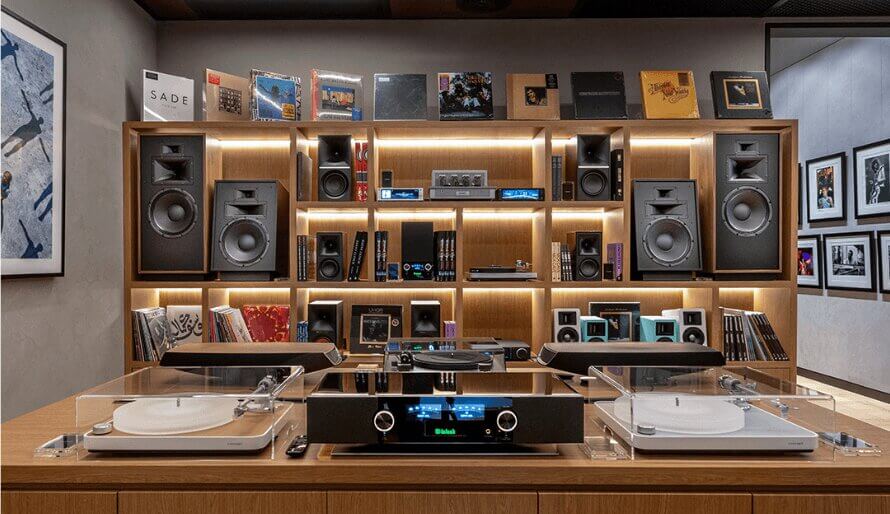
A showroom is not your living room, but comparing several pairs in the same space on the same material still tells you which presentation suits you. Bring recordings you know intimately rather than accepting demo tracks, and give yourself a proper hour. Specialist dealers here keep dedicated listening rooms for exactly this, and the session costs nothing beyond the drive.

- Your Room Matters More Than Your Speakers Do - September 14, 2026
- All You Have to Know About Hafilat Card Recharge - September 13, 2026
- Why Are More Dubai Residents Choosing Professional House Cleaning Services? - August 27, 2026