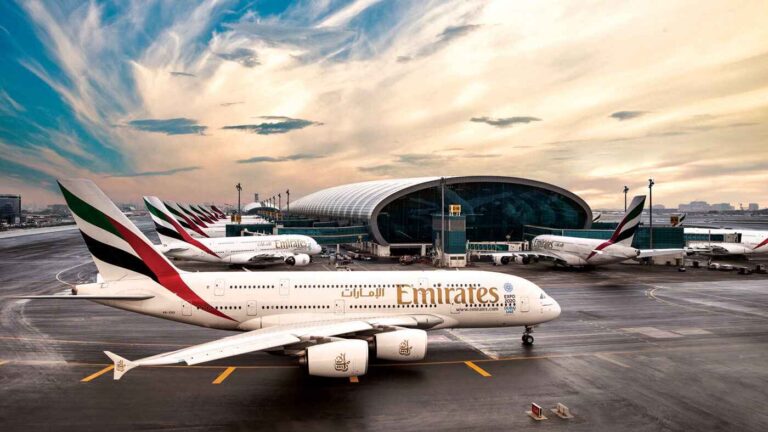
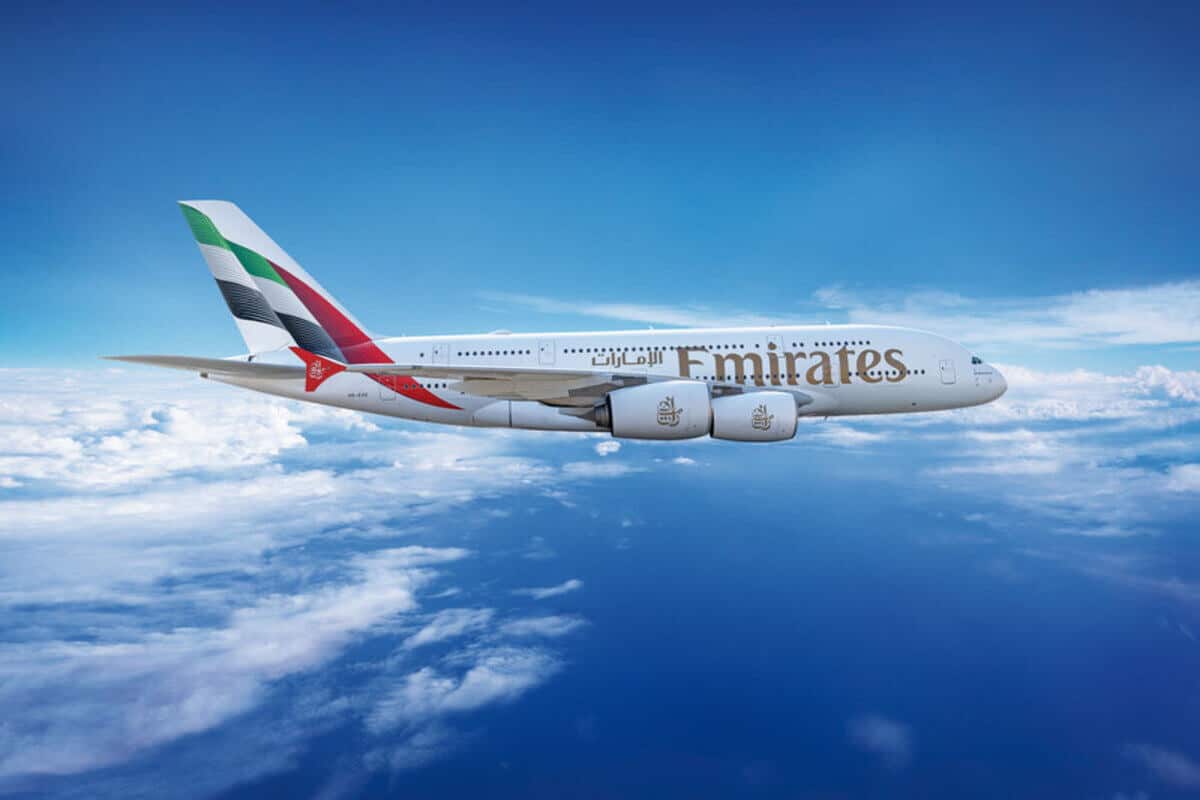
Emirates 100 Retrofit Aircraft: Inside the $5 Billion Cabin Overhaul Reshaping Dubai’s Flagship Fleet
Emirates has just crossed a milestone few airlines will ever attempt: on July 14, 2026, the Dubai-based carrier confirmed it had completed the cabin retrofit of its 100th wide-body aircraft, marking the halfway point of what it calls the largest known aircraft refurbishment programme ever undertaken by a single airline. If you’ve booked an Emirates flight recently, or you’re planning one from Dubai, this update matters — it directly affects which seats, screens, and cabin classes you’ll find on board.
This isn’t a minor cabin refresh. It’s a $5 billion, in-house engineering campaign that has already touched 100 aircraft, is contracted to eventually cover 219, and is now entering a new technological phase involving 4K OLED screens, Starlink internet, and a completely reworked economy seat. Below, we break down exactly what’s been done, what’s coming next, how it affects your next Emirates booking, and why Dubai’s own engineering teams — not outside contractors — are doing all of the work.
What Is the Emirates Retrofit Programme?
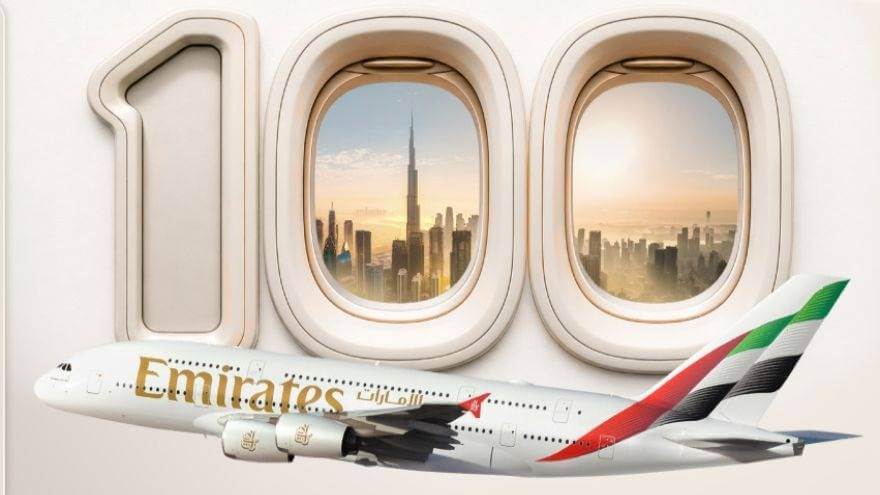
The Emirates retrofit programme is a fleet-wide cabin modernization initiative launched in November 2022 at Emirates Engineering’s dedicated hangars in Dubai. Rather than waiting years for new aircraft deliveries from Airbus and Boeing, Emirates chose to rebuild the interiors of aircraft it already owns and operates — stripping each cabin down and rebuilding it with new seats, galleys, lavatories, and in-flight entertainment systems, while the aircraft’s structure and airframe remain unchanged.
Quick answer: The Emirates retrofit programme is a $5 billion in-house initiative that rebuilds the cabin interiors of Emirates’ Airbus A380 and Boeing 777 aircraft, adding a Premium Economy cabin and modern seating. Launched in 2022, it will eventually cover 219 aircraft, with 100 completed as of July 2026.
The project was originally announced in November 2021 covering roughly 105 aircraft. Driven by strong customer demand for the airline’s new Premium Economy product, the scope was expanded twice — first to 191 aircraft in May 2024, then to 219 aircraft by the end of that year, split between Emirates’ two flagship wide-body types.
The 100-Aircraft Milestone: What’s Actually Been Done
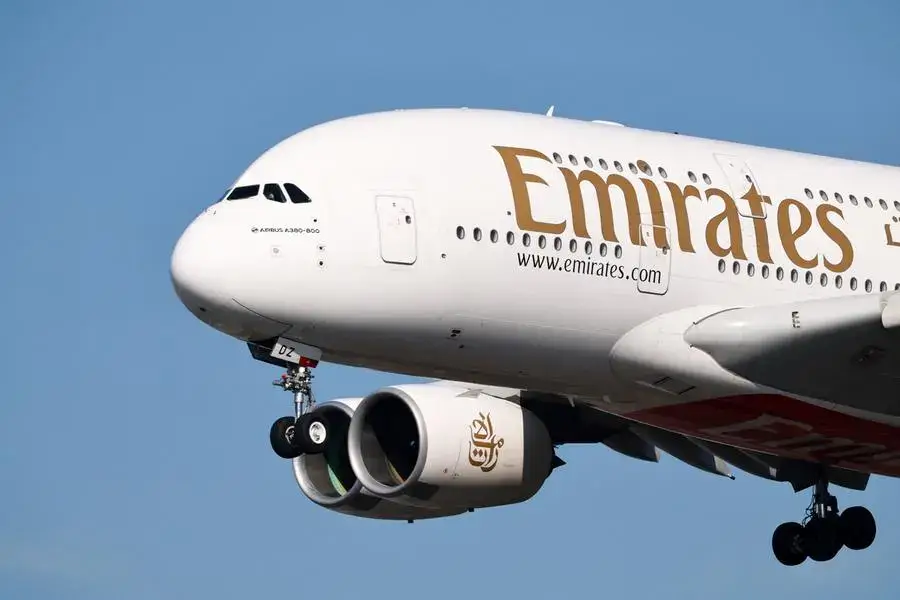
As of July 14, 2026, Emirates has completed full cabin retrofits on:
- 47 Airbus A380s — the double-decker superjumbo that anchors Emirates’ long-haul network
- 53 Boeing 777s — the workhorse of the airline’s route map, including many long, thin routes to secondary cities
Every one of the 100 refurbished aircraft has received a nose-to-tail interior rebuild. According to Emirates Engineering, an A380 retrofit requires installing more than 4,000 individual new parts, while each Boeing 777 receives over 2,500 replacement components — everything from seat frames and galley units to cabin lighting and entertainment hardware.
The Scale of the Engineering Effort
| Metric | Figure |
|---|---|
| Aircraft retrofitted so far | 100 (47 x A380, 53 x 777) |
| Total programme scope | 219 aircraft |
| Total investment | US $5 billion |
| Programme duration so far | 44 months (since Nov 2022) |
| Engineers & technicians involved | 400+ |
| Total labor hours logged | 4.4 million man-hours |
| Suppliers coordinated | 100+ |
| New Premium Economy seats installed | 3,800+ |
| Average retrofit rate | ~28 aircraft per year |
| Parts per A380 retrofit | 4,000+ |
| Parts per 777 retrofit | 2,500+ |
Sir Tim Clark, President of Emirates Airline, called the milestone a “significant achievement,” noting that completing full cabin retrofits on 100 wide-body aircraft in 44 months required the airline to “completely rewrite the rulebook” on retrofitting the two largest passenger aircraft in commercial aviation — entirely in-house, in Dubai.
That in-house detail is worth pausing on. Most airlines outsource large-scale cabin retrofits to third-party MRO (maintenance, repair, and overhaul) specialists. Emirates instead built the capability internally at its own hangars, which gives the airline direct control over scheduling, quality assurance, and — critically — the ability to keep evolving the cabin specification mid-programme, something outsourced contracts rarely allow.
Airbus A380 vs Boeing 777 Retrofit: What’s Different
Both aircraft types receive a full interior rebuild, but the scope and complexity differ meaningfully.
| Factor | Airbus A380 | Boeing 777 |
|---|---|---|
| Aircraft retrofitted to date | 47 | 53 |
| New parts per aircraft | 4,000+ | 2,500+ |
| Deck configuration | Two full decks (upper and main) | Single deck |
| Premium Economy placement | Introduced on the upper deck for the first time in a special 2-to-3 class conversion (May 2026) | Standard cabin reconfiguration |
| Notable milestone | First retrofitted A380 entered service Nov 2022; first 2-to-3 class structural conversion completed May 2026, deployed on Dubai–Birmingham | First retrofitted 777 entered commercial service August 2024, including Africa routes such as Cape Town and Johannesburg |
The May 2026 A380 conversion is particularly significant from an engineering standpoint: it involved structural changes to introduce a Premium Economy cabin on the upper deck of the A380 for the first time — something not possible with a simple seat swap. Emirates is targeting all 15 aircraft in this specific high-density-to-three-class category by the end of 2026.
Why Emirates Is Retrofitting Instead of Just Buying New Aircraft
Emirates operates one of the youngest and largest wide-body fleets in the world, but aircraft delivery delays across the industry — affecting both Airbus and Boeing programmes — have pushed back the arrival of new Airbus A350s and, eventually, Boeing 777X aircraft. Rather than let its existing A380 and 777 fleet fall behind on cabin product, Emirates chose to modernize the aircraft it already has.
This strategy delivers three practical benefits:
- Speed — Emirates can introduce its latest cabin product across dozens of aircraft per year without waiting on manufacturer production slots.
- Consistency — Passengers get a comparable onboard experience whether they’re flying a five-year-old or a fifteen-year-old airframe.
- Capacity optimization — Retrofitted aircraft with expanded Premium Economy cabins let Emirates serve growing demand for “the middle seat class” — comfort above Economy without the Business Class price — on more routes.
What’s Next: The Roadmap Through 2027
The 100-aircraft milestone is roughly the halfway point, not the finish line. Emirates has laid out a clear forward schedule:
| Timeframe | What Happens |
|---|---|
| By end of December 2026 | Approximately 20 more aircraft complete retrofit, pushing the programme well past the halfway mark |
| From August 2026 | A further phase begins covering 60 A380s and 51 Boeing 777s, introducing Safran Z400 economy seats, Panasonic Astrova in-flight entertainment, and Starlink connectivity |
| From October 2026 | The next specification phase begins fleet-wide: 4K OLED HDR10+ seatback entertainment screens and new lightweight Safran Z400 seats |
| By mid-2027 | Starlink high-speed internet connectivity rolled out across all 232 in-service aircraft (21 aircraft already equipped as of March 31, 2026) |
| Ongoing through completion | Full 219-aircraft scope finished, covering the entire eligible A380 and 777 fleet |
What Are Safran Z400 Seats and Panasonic Astrova?
Quick answer: The Safran Z400 is a new lightweight economy-class seat designed to improve passenger comfort while reducing aircraft weight. Panasonic Astrova is a next-generation in-flight entertainment system supporting 4K OLED displays, faster processing, and Bluetooth connectivity — both are being introduced in Emirates’ next retrofit phase starting in the second half of 2026.
Combined with Starlink — the satellite internet service being installed across Emirates’ entire in-service fleet by mid-2027 — these upgrades signal that Emirates’ retrofit strategy is no longer just about seats and cabin décor. It’s about bringing older airframes up to a full modern-aircraft technology standard, inside and out.
Premium Economy: The Product Driving the Whole Programme
A major driver behind the retrofit’s scale is the expansion of Emirates’ Premium Economy cabin. More than 3,800 new Premium Economy seats have been installed across the retrofitted fleet so far, and Emirates has confirmed every eligible aircraft in the programme receives the cabin.
Premium Economy on Emirates includes wider leather seats with deeper recline, adjustable leg and calf rests, additional headrest padding, integrated USB charging, and a dedicated dining service. It sits between standard Economy and Business Class both in comfort and in price, and Emirates expects to expand the product to around 99 destinations by the end of 2026 as more retrofitted aircraft enter service.
What This Means for Your Next Emirates Flight
If you have an upcoming Emirates booking, three practical questions matter more than the programme’s overall scale.
How do I know if my aircraft has been retrofitted? Check the aircraft type and cabin configuration shown at booking or in your booking confirmation. Emirates’ website and seat-selection tools generally reflect the current cabin layout for the specific aircraft assigned to your flight, though this can change closer to departure.
What happens if my aircraft is swapped to a non-retrofitted model? If an aircraft swap occurs, passengers booked in Premium Economy may be re-accommodated in Economy Class with a refund of the fare difference, or upgraded to Business Class where seats are available.
Does Premium Economy come with extra baggage allowance? Yes — Premium Economy passengers typically receive a higher checked baggage allowance than standard Economy fares, up to 35 kg on weight-concept routes, or two pieces up to 23 kg each on piece-concept routes, though exact allowances vary by route and fare type.
The Dubai Connection: Why This Matters Beyond the Cabin
Emirates’ decision to run this entire $5 billion retrofit in-house — rather than sending aircraft abroad for third-party MRO work — reinforces Dubai’s position as a serious global centre for aviation engineering, not just aviation operations. The programme has trained and deployed over 400 specialist engineers and technicians locally, coordinated more than 100 international suppliers into Dubai’s supply chain, and demonstrated large-scale advanced manufacturing and logistics capability entirely within the emirate.
For travelers, there’s a secondary benefit too: as Premium Economy expands to more destinations and cabin standards rise fleet-wide, Dubai becomes an increasingly attractive long-haul stopover hub — a factor worth considering if you’re already planning a Dubai layover or short break around a long-haul Emirates itinerary.
Emirates has also tied the programme to a sustainability initiative, repurposing thousands of kilograms of leather, fabric, and other materials removed from retrofitted cabins into a limited-edition “Aircrafted by Emirates” product line, and donating more than 4,000 backpacks made from recycled Economy Class seat fabric to children in 11 countries.
Key Takeaways
- Emirates completed its 100th aircraft cabin retrofit on July 14, 2026 — covering 47 A380s and 53 Boeing 777s.
- The full programme, budgeted at $5 billion, is contracted to eventually cover 219 aircraft.
- The work is done entirely in-house at Emirates Engineering’s Dubai hangars — no outsourcing.
- Roughly 20 more aircraft will be completed by the end of 2026, with a major new technology phase (Safran Z400 seats, Panasonic Astrova IFE, 4K OLED screens, Starlink) starting between August and October 2026.
- Starlink connectivity is targeted across all 232 in-service Emirates aircraft by mid-2027.
- The retrofit is the primary vehicle for expanding Emirates’ Premium Economy cabin, with 3,800+ new seats installed to date.
FAQ
How many Emirates aircraft have been retrofitted so far?
As of July 14, 2026, Emirates has retrofitted 100 aircraft — 47 Airbus A380s and 53 Boeing 777s — under its $5 billion cabin modernization programme.
How much is Emirates spending on its retrofit programme?
Emirates has committed approximately US $5 billion to the retrofit programme, which covers a total of 219 aircraft across its A380 and 777 fleets.
When did Emirates start retrofitting its fleet?
The programme began in November 2022 at Emirates Engineering’s hangars in Dubai, though it was first announced in November 2021 covering a smaller initial scope of 105 aircraft.
When will Emirates finish retrofitting its entire fleet?
Emirates hasn’t published a final completion date, but expects roughly 20 more aircraft to be finished by the end of 2026, moving the programme past the halfway mark of its 219-aircraft target, with work continuing into 2027 and beyond.
What’s new in Emirates’ next retrofit phase?
Starting between August and October 2026, new retrofits will include Safran Z400 lightweight seats, Panasonic Astrova in-flight entertainment, 4K OLED HDR10+ seatback screens, and Starlink internet connectivity.
Is Emirates adding Starlink to all its aircraft?
Yes. Emirates plans to install Starlink satellite internet across all 232 in-service aircraft by mid-2027; 21 aircraft were already equipped as of March 31, 2026.
What is Emirates Premium Economy?
Emirates Premium Economy is a cabin class positioned between Economy and Business Class, featuring wider leather seats, deeper recline, adjustable leg and calf rests, USB charging, and a dedicated dining service. More than 3,800 Premium Economy seats have been installed through the retrofit programme.
How do I check if my Emirates flight has a retrofitted aircraft?
Review the aircraft type and cabin layout shown during booking or in your confirmation email, though the assigned aircraft can change before departure due to operational scheduling.
What happens if my Emirates aircraft is swapped before departure?
If a swap moves you from a retrofitted to a non-retrofitted aircraft, Premium Economy passengers may be re-accommodated in Economy with a fare-difference refund, or upgraded to Business Class if seats are available.
Which aircraft types are included in the Emirates retrofit programme?
The programme covers Emirates’ Airbus A380 and Boeing 777 fleets exclusively — it does not apply to incoming Airbus A350s or future Boeing 777X deliveries, which arrive with the latest cabin standard from the factory.
Is the Emirates retrofit done in-house or outsourced?
It’s done entirely in-house at Emirates Engineering’s dedicated Dubai hangars, involving more than 400 engineers and technicians and coordination with over 100 external parts suppliers.
How many parts go into retrofitting one aircraft?
An Airbus A380 retrofit requires installing more than 4,000 new parts, while a Boeing 777 retrofit involves more than 2,500 replacement components.
Does the retrofit change the structure of the aircraft?
Generally no — the retrofit is an interior rebuild. The exception is the A380 2-to-3 class conversion completed in May 2026, which involved structural changes to add Premium Economy to the upper deck for the first time.
Will Dubai layovers benefit from the retrofit programme?
Indirectly, yes. As Premium Economy expands to more destinations and cabin standards rise across the fleet, Dubai’s appeal as a long-haul stopover hub increases for travelers planning multi-leg itineraries through DXB.

- How Al Maktoum International Airport Will Become the Biggest Airport in the World: Complete 2026 Guide - July 27, 2026
- Al Mahatta Park Sharjah Area Guide 2026: Location, History, Timings & Things to Do - July 20, 2026
- UAE to India Travel Rules 2026: Air Suvidha, e-Arrival Card, and Gold Limits Explained - July 15, 2026