Dubai Free Zones Area Guide 2026: Complete List, Costs, Tax Rules & How to Choose
Dubai’s skyline is easy to admire from a distance. What is harder to see from outside the country is the machinery behind it: more than two dozen self-governing economic districts, each with its own regulator, licensing rules, and reason for existing. These are Dubai’s free zones, and together they form one of the most influential business infrastructures in the world.
If you are trying to decide where to register a company, relocate a team, or simply understand why “DMCC” or “JAFZA” keeps appearing next to Dubai business news, you are dealing with a system that looks simple on the surface — 100% foreign ownership, fast licensing, low tax — but has real complexity underneath. Since 2023, UAE Corporate Tax has changed what “tax-free” actually means for a free zone company, and since free zones are physical places as much as legal ones, where you set up affects your daily commute, your banking options, and even where you might choose to live.
This guide covers both layers. It maps Dubai’s free zones by industry and by geography, explains the licensing and cost structure in current terms, and walks through the 2026 tax rules in plain language — so you can make a decision based on how each zone actually works, not on a marketing brochure.
What Is a Dubai Free Zone?
A Dubai free zone is a designated economic area that operates under its own regulatory framework, sitting alongside – but separate from – the mainland system governed by Dubai’s Department of Economy and Tourism (DET). Each free zone is established by law, run by its own authority, and built around one or more target industries.
The model began in 1985 with the Jebel Ali Free Zone (JAFZA), created to attract international manufacturers and traders with incentives that did not exist in the rest of the country at the time. It worked well enough that Dubai repeated the formula for four decades, building specialised zones for commodities, media, technology, healthcare, finance, logistics, and design. Today, Dubai has more than 20 active free zones, and the wider UAE hosts over 40 free zones across all seven emirates.
The core legal and financial advantages that apply, in some form, across nearly every Dubai free zone are:
- 100% foreign ownership – no UAE national sponsor or local shareholder is required.
- Full repatriation of profits and capital.
- Customs duty exemption on goods that stay within, or move between, free zones.
- Independent regulation – each authority (DMCC, DIFC’s DFSA, JAFZA, and so on) issues its own licenses and sets its own compliance rules.
- Streamlined registration, often completed in one to five business days for standard activities.
What a free zone does not automatically give you is unrestricted access to Dubai’s mainland market. A free zone company is structured for international trade and for business conducted from within its own zone or with clients outside the UAE. Selling directly and repeatedly to mainland consumers or companies generally requires either a mainland distributor, a specific permit from DET, or a separate mainland entity. This single point – free zone versus mainland market access — is the most common source of confusion for first-time founders, and it is the first question worth resolving before choosing a jurisdiction.
Free Zone vs. Mainland: The Real Difference in 2026
Before UAE Corporate Tax existed, the calculation was simple: free zones were tax-free, mainland companies were not, and free zones usually won. That is no longer the full picture.
| Factor | Free Zone Company | Mainland Company |
|---|---|---|
| Foreign ownership | 100% in virtually all activities | 100% in most activities since 2021 reforms |
| Corporate tax | 0% on qualifying income if the company meets QFZP conditions; 9% otherwise | 0% up to AED 375,000 taxable income, 9% above that |
| UAE mainland market access | Restricted — needs a distributor, DET permit, or mainland entity | Full and direct |
| Setup speed | Often 1–5 business days | Typically slightly longer, with more DET approvals depending on activity |
| Typical best fit | Export, international services, e-commerce, holding structures, regulated finance | Retail, hospitality, government contracting, local services |
The practical rule of thumb: if most of your revenue will come from clients outside the UAE, or from other free zone entities, a free zone structure with genuine QFZP status is usually more tax-efficient. If most of your revenue will come from UAE mainland customers, a mainland company is often simpler and, once you account for compliance costs, not meaningfully more expensive.
Dubai Free Zones by Industry: The Complete Directory
Each Dubai free zone is built around a specific economic cluster. Below is a categorised map of the most established zones, organised the way a founder should actually think about the decision — by what you do, not just by brand name.
Trade, Commodities & General Business
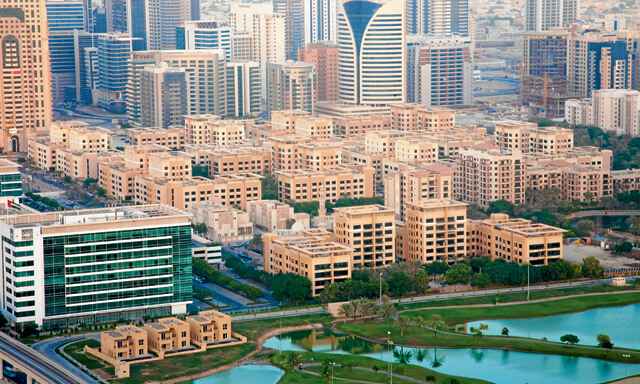
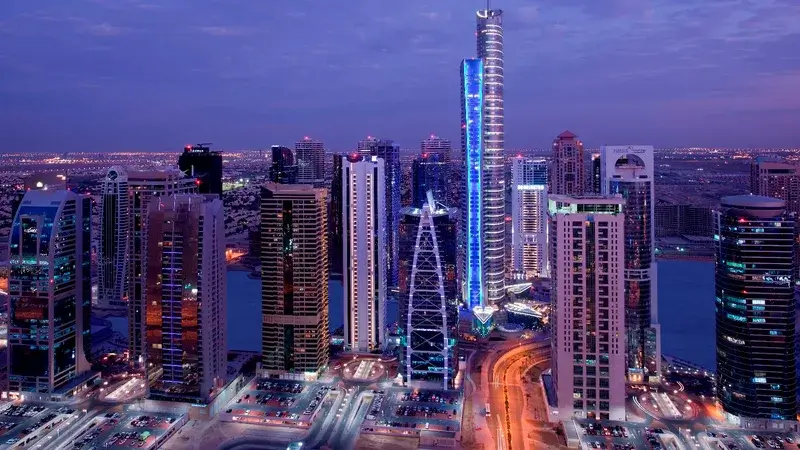
Dubai Multi Commodities Centre (DMCC) is the largest free zone in the UAE by company count, with tens of thousands of registered businesses from well over 100 countries, operating out of the Jumeirah Lakes Towers (JLT) district. Originally built for gold, diamonds, tea, coffee, and energy trading, DMCC has broadened into general trading, fintech, crypto, and professional services, and has repeatedly been recognised as a top-performing global free zone. It is a strong middle-ground choice: mid-tier cost, very high banking acceptance, and a credible address for almost any B2B service or trading business.
International Free Zone Authority (IFZA) and Meydan Free Zone sit at the affordable end of the spectrum, with entry-level licenses covering thousands of business activities, minimal or no share-capital requirements, and fully remote digital setup. They are popular with solo founders, consultants, and small international trading businesses that do not need an industry-specific ecosystem, though they generally carry less prestige with banks than DMCC or DIFC.
Logistics, Manufacturing & Trade Infrastructure
Jebel Ali Free Zone (JAFZA), Dubai’s original free zone, remains the country’s flagship logistics and industrial hub, sitting directly beside Jebel Ali Port — one of the busiest container ports in the world. JAFZA hosts thousands of companies across manufacturing, heavy industry, and international trade, and its direct sea, air, and road connectivity makes it the clear choice for businesses that physically move goods. JAFZA is also a designated zone for VAT purposes, which matters for companies shipping between free zones (more on this below).
Dubai South and Dubai CommerCity anchor the logistics and e-commerce side of the map, combining warehousing, last-mile delivery infrastructure, and proximity to Al Maktoum International Airport — relevant as online retail volumes in the region continue to grow.
Financial Services & Fintech
Dubai International Financial Centre (DIFC) operates under English common law with its own independent regulator, the Dubai Financial Services Authority (DFSA), making it the only realistic option in Dubai for licensed financial activities — asset management, banking, insurance, fund structures, and family offices. DIFC’s fintech segment has grown substantially in recent years, reinforcing its position as the region’s leading financial hub. It is also the most expensive Dubai free zone to set up in, but for regulated finance there is no comparable alternative.
Technology & Media
Dubai Internet City (DIC), established in 1999, remains the region’s anchor tech hub, hosting regional offices for major global technology companies and a dense ecosystem for SaaS, IT consulting, and software businesses. Dubai Silicon Oasis (DSO) offers a lower-cost, startup-friendly alternative, including the Dubai Technology Entrepreneur Campus (DTEC) co-working environment for very early-stage founders. Dubai Media City (DMC) and neighbouring creative clusters host advertising, production, and PR firms, forming one of the region’s longest-established media ecosystems.
Healthcare, Design & Specialised Sectors
Dubai Healthcare City (DHCC) regulates healthcare and wellness activities under its own dedicated framework. Dubai Design District (d3) serves fashion, design, and creative industries. Dubai Gold and Diamond Park provides integrated manufacturing, retail, and trading facilities for jewellery businesses. Boutique zones such as DUQE, located aboard the permanently docked QE2 ship, cater to innovation-focused start-ups seeking a distinctive address.
Quick Comparison Table
| Free Zone | Best For | Regulator/Authority | Established | Notable Feature |
|---|---|---|---|---|
| DMCC | General trading, commodities, fintech | DMCC Authority | 2002 | Largest free zone by company count |
| JAFZA | Logistics, manufacturing, trade | JAFZA Authority | 1985 | Adjacent to Jebel Ali Port; VAT designated zone |
| DIFC | Financial services, funds, fintech | DFSA | 2004 | Common law jurisdiction; only option for regulated finance |
| DIC | Technology, SaaS, IT | TECOM Group | 1999 | Region’s original tech hub |
| DAFZA | Aviation-linked trade, logistics | DAFZA Authority | 1996 | Airport-adjacent; VAT designated zone |
| IFZA | SMEs, consultants, remote founders | IFZA Authority | 2018 | Low-cost, fully digital setup |
| Meydan Free Zone | General business, multi-activity licenses | Meydan FZ | 2020 | Same-day licensing for standard applications |
| Dubai South | E-commerce, logistics, aviation | Dubai South Authority | 2006 | Near Al Maktoum International Airport |
| Dubai CommerCity | E-commerce, digital trade | DCC Authority | 2021 | First zone dedicated to e-commerce |
How to Choose the Right Free Zone: A Decision Framework
Instead of starting with a list of zones, it is more useful to start with four questions about your own business:
- Who are your clients? If they are mostly outside the UAE or inside other free zones, almost any zone works from a tax perspective. If a meaningful share are UAE mainland companies or consumers, weigh mainland company formation seriously.
- Is your activity regulated? Financial services essentially means DIFC. Healthcare points to DHCC. Everything else has more flexibility.
- Do you move physical goods? If so, prioritise a designated zone with port or airport access — JAFZA or DAFZA — for VAT efficiency on goods movements.
- What is your budget and urgency? IFZA and Meydan offer the fastest, cheapest path to a license (from roughly AED 5,750–12,900 for a basic package); DMCC and DIFC cost more but carry stronger banking credibility.
A fifth, less discussed factor: which UAE bank you plan to use. Banks vary in how comfortable they are opening accounts for companies registered in newer or lower-cost free zones. Confirming bank acceptance before you commit to a zone can save six to ten weeks of delay.
Free Zone Geography: Where These Zones Actually Sit in Dubai
Because a free zone is a physical place, not just a legal structure, its location has real consequences for daily life — commute time, nearby housing, and access to schools or amenities if you plan to relocate.
- DIFC sits in the heart of the city, close to Downtown Dubai and Business Bay, making it convenient for professionals who want to live nearby in Downtown, Business Bay, or Jumeirah.
- DMCC operates from Jumeirah Lakes Towers (JLT), directly across from Dubai Marina, putting employees within easy reach of Marina and JBR residential communities.
- JAFZA and DAFZA sit further from the city centre — JAFZA near Jebel Ali Port in the southwest, DAFZA beside Dubai International Airport in the northeast — which suits businesses prioritising logistics access over city-centre convenience.
- Dubai Internet City, Media City, and Knowledge Park cluster together near Al Sufouh, within easy commuting distance of Dubai Marina, JBR, and the Palm.
- Dubai South sits near Al Maktoum International Airport, in Dubai’s rapidly developing southern corridor, aligned with the emirate’s long-term urban expansion under its 2033 economic and development plans.
For anyone relocating for work, this geography often matters as much as the license fee — it is the difference between a 15-minute commute and an hour each way across the city.
Corporate Tax and the QFZP Regime: What “Tax-Free” Really Means in 2026
This is the section most free zone guides get wrong, and it is worth reading carefully.
Since UAE Corporate Tax took effect (Federal Decree-Law No. 47 of 2022), every free zone company is a taxable person by default and must register with the Federal Tax Authority (FTA), regardless of which zone it is in. A free zone license does not, on its own, exempt a company from tax.
What it can do is qualify the company for Qualifying Free Zone Person (QFZP) status, which allows a 0% corporate tax rate – but only on qualifying income, and only if the company satisfies all of the following conditions simultaneously:
- Is a genuine free zone person — incorporated, established, or registered in a recognised free zone.
- Maintains adequate economic substance in the zone — real premises, appropriately qualified staff, and management decisions actually made in the UAE.
- Earns qualifying income — primarily from transactions with other free zone persons, or from qualifying activities with clients outside the UAE.
- Passes the de minimis test — non-qualifying income (for example, from mainland clients) must stay below the lower of AED 5 million or 5% of total revenue.
- Has not elected to be taxed under the standard corporate tax regime.
Quick answer: A Dubai free zone company is not automatically tax-free in 2026. It pays 0% corporate tax only on qualifying income, and only if it holds Qualifying Free Zone Person (QFZP) status by meeting substance, income-type, and de minimis conditions set by the Federal Tax Authority.
If a company fails even one of these conditions, it loses QFZP status entirely — not just on the affected income — and becomes subject to the standard 9% corporate tax rate on all income for that tax year and the following four years, after which it may retest.
Two related mechanisms are worth knowing:
- The AED 375,000 threshold applies to standard (non-QFZP) taxable income, taxed at 0% up to that amount and 9% above it — this is a graduated band within one return, not a personal-style tax-free allowance.
- Small Business Relief (SBR) lets a company with total revenue at or below AED 3 million elect to be treated as having zero taxable income for the period. SBR is available for tax periods ending on or before 31 December 2026, must be actively elected, and cannot be combined with a QFZP claim for the same period.
Non-qualifying income above the de minimis threshold — most commonly, revenue billed directly to UAE mainland clients — is taxed at the standard 9% rate, even for an otherwise qualifying free zone company.
VAT and Designated Zones
A separate and often-confused layer is VAT. Some free zones – JAFZA and DAFZA among them — are officially classified as designated zones, which receive special VAT treatment on the movement of goods between designated zones. This has no bearing on corporate tax eligibility; it is a distinct customs and VAT classification that mainly matters for companies moving physical goods.
Setup Costs, License Types & the Practical Process
Dubai free zone setup costs vary widely depending on the zone, license type, office requirement, and number of visas needed.
- Trading license — for import, export, and resale of goods.
- Service license — for consulting, IT, marketing, and other knowledge-based work.
- Industrial license — for manufacturing, processing, and assembly (JAFZA is the clearest example).
- E-commerce license — for online retail and digital trade (Dubai CommerCity’s core focus).
Indicative starting license costs in 2026 range from around AED 5,750–12,900 at IFZA or Meydan for a basic package, up to AED 50,000 or more at DIFC for a full financial-services setup, with DMCC typically sitting in the mid-tier range. Office requirements — from a shared flexi-desk to a dedicated physical office — and the number of investor and employee visas needed both add meaningfully to the total.
A typical setup sequence looks like this:
- Choose the free zone and confirm your activity is on its approved list.
- Reserve a trade name and submit initial approval documents.
- Select a license type and office package (flexi-desk, shared desk, or dedicated office).
- Pay license fees and receive the trade license — often within one to five business days for standard activities.
- Apply for the establishment card, then investor and employee visas.
- Open a corporate bank account (confirm acceptance for your chosen zone in advance).
- Register with the FTA for Corporate Tax and, if applicable, VAT.
Renewal, Compliance & Exit: The Part Most Guides Skip
A free zone license is not a one-time purchase. Annual renewal fees apply, and late renewal typically triggers escalating fines and, eventually, license suspension. Once UAE Corporate Tax applies, ongoing obligations include annual FTA registration, tax return filing (even for zero-liability periods), and — for any company claiming QFZP status — audited financial statements and transfer-pricing documentation for related-party transactions.
If a business no longer needs its free zone entity, formal liquidation is required; simply abandoning a license leads to accumulating fines against the company and, in some cases, its shareholders. Founders planning a short-term or trial venture should factor renewal and potential liquidation costs into their initial budget, not just the setup fee.
Free Zone Company Structures: FZE vs. FZCO
Most Dubai free zones offer two core legal structures. A Free Zone Establishment (FZE) is a single-shareholder entity, while a Free Zone Company (FZCO, sometimes called FZ-LLC) allows multiple shareholders — typically two or more. The right choice depends on ownership structure rather than industry: solo founders often start with an FZE and convert to an FZCO later if they bring in partners or investors.
FAQs
What is a free zone in Dubai?
A Dubai free zone is a designated economic area with its own regulatory authority, offering benefits such as 100% foreign ownership, customs duty exemptions, and streamlined licensing, operating separately from the mainland system run by Dubai’s Department of Economy and Tourism.
How many free zones are there in Dubai?
Dubai has more than 20 active free zones as of 2026, each built around specific industries such as commodities, finance, media, technology, healthcare, and logistics. The wider UAE hosts over 40 free zones across all seven emirates.
Are Dubai free zones really tax-free?
Not automatically. A free zone company pays 0% corporate tax only on qualifying income, and only if it meets all five Qualifying Free Zone Person (QFZP) conditions set by the Federal Tax Authority. Non-qualifying income is taxed at the standard 9% rate.
Can a Dubai free zone company trade with the UAE mainland?
Only in a limited way. A free zone company generally cannot sell directly and repeatedly to mainland clients without a mainland distributor, a specific DET permit, or a separate mainland entity, and doing so beyond the de minimis threshold can jeopardise QFZP tax status.
Which is the cheapest free zone in Dubai?
IFZA and Meydan Free Zone typically offer the lowest entry-level license costs, starting from roughly AED 5,750–12,900, making them popular with solo founders, consultants, and small international trading businesses.
Which Dubai free zone is best for a tech startup? Dubai Internet City is the most established tech ecosystem, while Dubai Silicon Oasis (via DTEC) offers a lower-cost, startup-friendly alternative for very early-stage founders.
Which free zone should a financial services business choose?
DIFC is the only realistic choice for regulated financial activities in Dubai, operating under English common law with its own regulator, the Dubai Financial Services Authority (DFSA).
What is the difference between an FZE and an FZCO?
An FZE has a single shareholder, while an FZCO (or FZ-LLC) allows multiple shareholders. The choice depends on ownership structure rather than business activity.
What is a designated zone for VAT purposes?
A designated zone, such as JAFZA or DAFZA, receives special VAT treatment on goods moved between designated zones. This is a customs/VAT classification separate from corporate tax eligibility.
Do free zone companies need to file corporate tax returns?
Yes. Every free zone entity is a taxable person under UAE Corporate Tax Law and must register with the FTA and file annual returns, even if it ultimately qualifies for a 0% rate on its qualifying income.
What happens if a free zone company loses its QFZP status?
It becomes subject to the standard 9% corporate tax rate on its full income for that tax year and the following four years, after which it may retest its eligibility.
Is a free zone or mainland company better for a small business?
It depends on your client base. Export-focused or internationally-facing businesses generally benefit more from a free zone structure, while businesses relying mainly on UAE mainland customers often find a mainland company simpler and comparably tax-efficient once compliance costs are considered.
How long does it take to set up a company in a Dubai free zone?
Standard licenses can often be issued within one to five business days, though timelines extend for regulated activities, larger office requirements, or additional visa processing.
Which free zone has the best banking acceptance?
DMCC and DIFC are generally viewed as having the strongest acceptance with tier-one UAE banks, though acceptance should always be confirmed directly with the target bank before committing to a zone.
Can I set up a Dubai free zone company remotely without visiting the UAE?
Yes, in many cases. Zones such as IFZA and Meydan offer fully digital, remote setup processes, though opening a corporate bank account typically still benefits from an in-person visit.

- Ismail Kouami: The Dubai Entrepreneur Building Companies Across Fintech, Mobility and Software - September 13, 2026
- 7 Costly Mistakes Entrepreneurs Make Before Hiring Company Setup Consultants in Dubai - September 5, 2026
- How Monthly Car Hire Simplifies Transportation During Home Relocations - July 27, 2026