How Al Maktoum International Airport Will Become the Biggest Airport in the World: Complete 2026 Guide
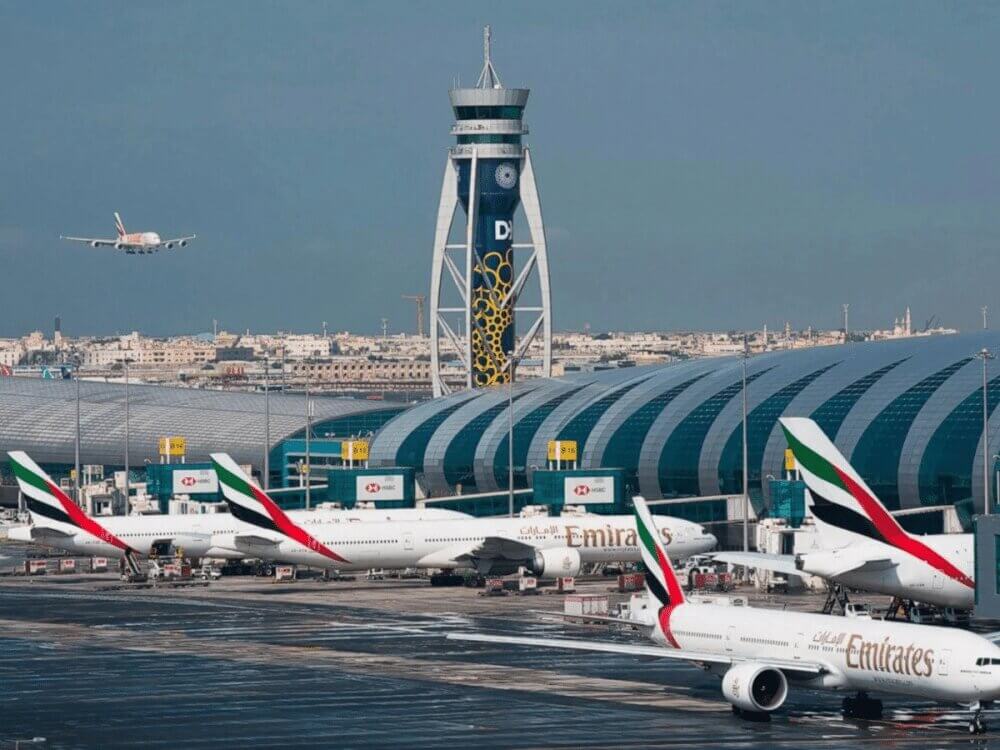
Dubai already operates the world’s busiest airport for international passenger traffic. That is not the ambitious part of this story. The ambitious part is that Dubai has decided its current airport, Dubai International Airport (DXB), is not big enough for what comes next — and rather than squeeze more capacity out of a site boxed in by highways and residential neighborhoods, the emirate is building an entirely new aviation capital from the ground up.
That new capital is Al Maktoum International Airport, known locally as DWC (Dubai World Central), located in Dubai South roughly 37 kilometers southwest of downtown Dubai. When it is fully complete, it is designed to handle 260 million passengers a year and 12 million tonnes of cargo annually, figures that would make it not just the largest airport in the world by a wide margin, but roughly three times the current capacity of DXB itself, which carried around 87 to 92 million passengers in 2024.
If you have searched for “Al Maktoum International Airport plans,” you are probably trying to answer one or more of a handful of real questions: What exactly is being built? When will it open, and in what stages? What happens to Dubai International Airport and the airlines that fly out of it? How does this affect residents, property investors, and travelers planning trips to Dubai over the next decade? This guide answers all of that in one place, using verified figures from Dubai’s aviation authorities, government statements, and the most recent 2026 project updates, rather than repeating the same three facts recycled across most articles on this topic.
We will walk through the history of the site, the exact three-phase construction plan and its timeline, the technology and design philosophy behind the terminals, the fate of Dubai International Airport, how the two airports and the wider transport network will connect, what it means for the aviation industry and for Dubai South real estate, and a full FAQ section addressing the most common questions people are asking Google and AI assistants about this project right now.
What Is Al Maktoum International Airport? A Quick Primer
Al Maktoum International Airport takes its name from the ruling family of Dubai and sits at the heart of Dubai World Central, a 140-square-kilometer master-planned district that is itself organized into distinct zones: Dubai Logistics City, Dubai Commercial City, Dubai Residential City, Aviation City, and Golf City, all built around the airport as the central anchor. This structure is what planners and urbanists call an aerotropolis — a city built around an airport rather than an airport bolted onto an existing city, similar in concept (though far larger in ambition) to projects like Songdo in South Korea or the original planning philosophy behind Amsterdam Schiphol’s surrounding business districts.
The airport itself is not new. It opened in 2010, initially handling only cargo flights, with passenger services added roughly a year later. For most of its existence it has operated as a secondary facility — a relief valve for cargo, private aviation, and a handful of budget carriers — while DXB has carried the overwhelming majority of Dubai’s passenger traffic. As recently as 2022, Al Maktoum International handled fewer than 900,000 passengers, a rounding error compared to DXB’s tens of millions.
That is about to change completely. In 2024, Their Highnesses approved a Dh128 billion (approximately $35 billion) master expansion plan that will transform Al Maktoum International from a secondary airport into what Dubai’s leadership describes as the primary aviation hub for the emirate, and ultimately the largest airport on Earth by passenger capacity.
Key Facts at a Glance
| Metric | Detail |
|---|---|
| Official name | Al Maktoum International Airport (AMIA) |
| Also known as | Dubai World Central (DWC) |
| Location | Dubai South, ~37 km southwest of central Dubai |
| Opened | 2010 (cargo), 2011 (passenger services) |
| Total project budget | Dh128 billion (~$35 billion USD) |
| Ultimate passenger capacity | 260 million passengers per year |
| Ultimate cargo capacity | 12 million tonnes per year |
| Runways (final plan) | 5 parallel runways |
| Gates (final plan) | Around 400 aircraft gates |
| Terminal buildings | 5 passenger terminal buildings across 8 interconnected terminal clusters |
| Total site area | Approximately 70 square kilometers |
| Delivering agency | Dubai Aviation Engineering Projects Agency (DAEP) |
| Masterplanning & design | Coop Himmelb(l)au and Dar Al-Handasah consortium |
| Approving authority | Sheikh Mohammed bin Rashid Al Maktoum, Vice President, Prime Minister and Ruler of Dubai |
This is the definition-box version of the story. The rest of this guide unpacks each of those numbers, explains where they come from, and puts them in context against what is actually happening on the ground in 2026.
The History Behind the Project: Why Dubai Needed a New Airport
To understand why Dubai is investing $35 billion in a new airport rather than continuing to expand Dubai International, you need to understand DXB’s physical limitations.
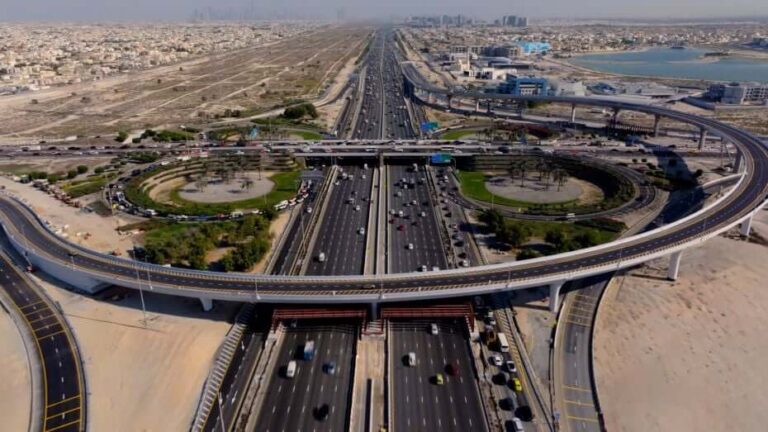
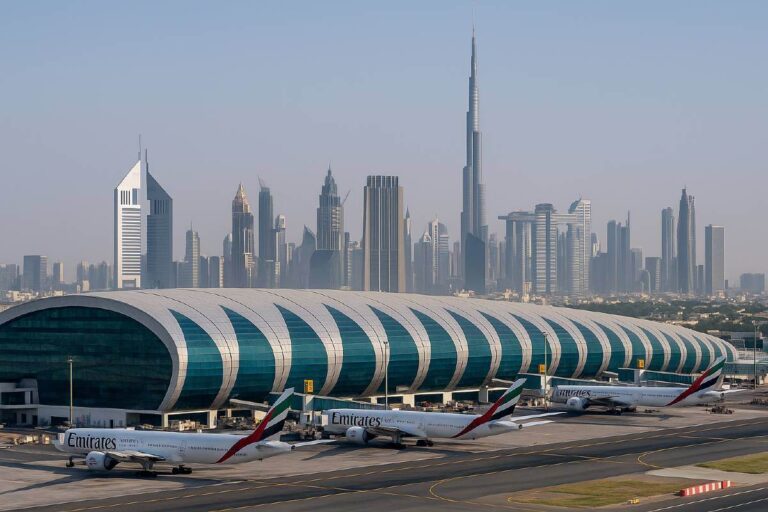
Dubai International Airport opened in 1960 and has been expanded multiple times since, most significantly with the additions of Terminal 3 and Concourse A to serve Emirates’ Airbus A380 fleet. But DXB sits less than five kilometers from Dubai’s city center, hemmed in on all sides by dense residential development and major highway interchanges including Sheikh Zayed Road. There is, quite literally, no more land left around DXB to build new runways or terminals. Its two runways already operate close to their practical ceiling, and Dubai Airports’ own leadership has said publicly that the airport will cross the 100-million-passenger mark within the next couple of years and could approach 114 million by 2031 — a level widely regarded in the aviation industry as close to the physical limit for a two-runway airport of this configuration.
Dubai’s civil aviation leadership faced a choice familiar to many rapidly growing global cities: fight for incremental capacity at an aging, landlocked hub, or leapfrog the constraint entirely with a greenfield site. Dubai chose the second path, and Al Maktoum International — already owned by the government, already zoned for aviation use, and sitting on land with room to expand almost indefinitely — was the obvious candidate.
The first serious expansion announcement for DWC dates back over a decade, with early 2010s plans targeting a far more modest capacity of around 26.5 million passengers by 2025. Those early plans were essentially a modest upgrade. What was announced in 2024, and what has been moving from paper into active construction through 2025 and 2026, is a completely different order of magnitude: a full replacement hub designed not for tens of millions but for hundreds of millions of annual passengers, explicitly intended to absorb all of DXB’s operations eventually.
The Three-Phase Construction Plan: A Full Timeline
Unlike many megaprojects announced with a single completion date and little else, Dubai’s aviation authorities have released a reasonably detailed phased rollout for Al Maktoum International. Understanding these phases matters because it tells you not just when the airport will be “done,” but when specific capacity, specific terminals, and specific airline relocations will actually happen — which is usually the real question behind a search like “Al Maktoum International Airport plans.”
Phase One: The Foundation (Targeted for completion around 2032)
Phase one is the portion of the project currently under active construction, with major contractor packages awarded and infrastructure work under way through 2025 and 2026. It centers on:
- The West Terminal Building — the first passenger terminal, designed to connect directly to the wider city via a new dedicated express metro line
- Concourse 1 — the first of the airport’s contact-gate concourses
- An initial runway and taxiway system sufficient to support commercial operations at scale
- Core airside and landside infrastructure, ground service roads, and the beginning of the automated baggage handling network
Once phase one is operational, Al Maktoum International is expected to have capacity for roughly 130 to 150 million passengers annually, figures that vary slightly between official statements but which, even at the lower end, already exceed the roughly 92 million passengers DXB handled in 2024. In other words, phase one alone is designed to make Al Maktoum International larger than Dubai’s current main airport, before the project is anywhere near finished.
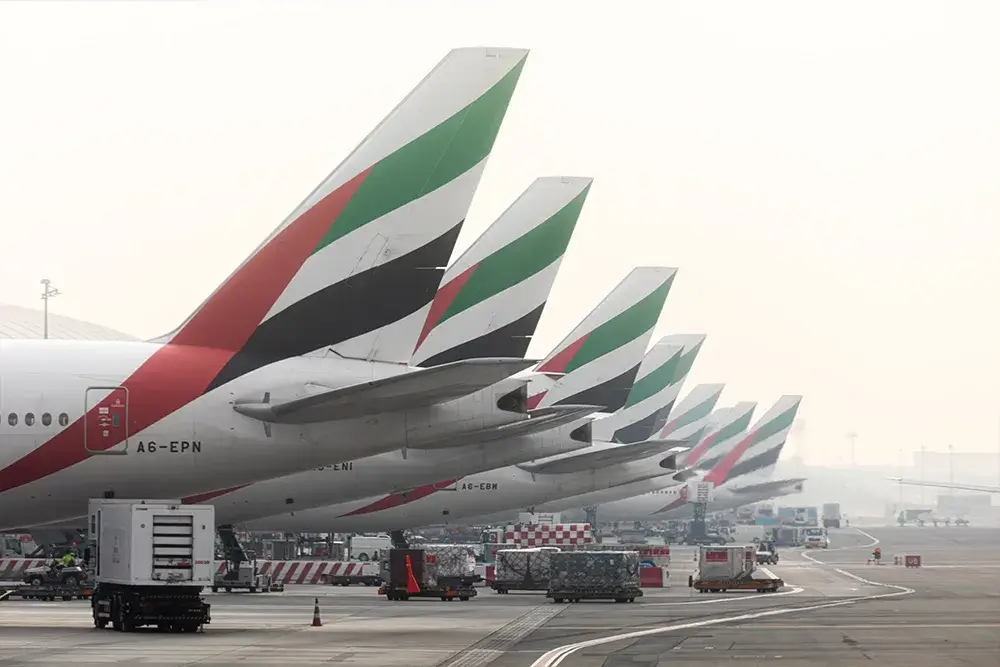
This is also the phase tied most directly to Emirates’ relocation. Emirates has confirmed it intends to move its entire operation to Al Maktoum International “in one go” rather than gradually, according to statements from Sheikh Ahmed bin Saeed Al Maktoum, and has already broken ground on a $5.1 billion engineering and maintenance complex at Dubai South to support that move, with the first phase of that facility targeted for completion around 2029 — positioning Emirates’ support infrastructure to be ready ahead of the passenger terminal transition.
Phase Two: The Second Concourse (Following decade, targeted through the mid-2030s)
The second phase adds a second concourse, built parallel and largely identical in design to Concourse 1, which is expected to push total contact gates to around 200 and lift annual capacity toward 150 million-plus passengers at this stage of the build-out. Phase two also includes:
- Three additional underground train stations to serve the new concourse
- Expansion of the ground service equipment road network
- Continued build-out of the automated baggage handling system across the newly added terminal area
- Additional support facilities for airline operations, catering, and cargo
This is also the phase most closely associated with the broader 2032–2034 transition window, during which Dubai Airports leadership has indicated that operations will begin shifting from DXB to DWC in earnest, rather than the full switch happening as a single event.
Phase Three: The Ultimate Build-Out (Horizon toward 2050)
The final phase completes the vision: five parallel runways, roughly 400 aircraft gates, and five full passenger terminal buildings organized into eight smaller, interconnected terminal clusters linked by an extensive underground train system. At full build-out, the airport reaches its headline figures of 260 million passengers and 12 million tonnes of cargo annually, spread across a site of roughly 70 square kilometers — making the physical footprint alone larger than some entire cities.
DAEP and Dubai’s aviation leadership have described this as a project designed to serve the next 40 years of anticipated growth in Dubai’s aviation sector, with the ultimate phase not expected to be fully realized until around 2050. It’s worth being direct about this timeline structure, because a lot of coverage blurs it: the headline number of 260 million passengers is a 2050-horizon figure, while the near-term, tangible milestone that will actually affect travelers and residents is the phase one opening, targeted for the early 2030s.
Timeline Summary Table
| Phase | Target Completion | Passenger Capacity | Key Infrastructure |
|---|---|---|---|
| Phase 1 | ~2032 | ~130–150 million/year | West Terminal Building, Concourse 1, express metro link |
| Phase 2 | Mid-to-late 2030s | 150 million+/year, 200 gates | Concourse 2, 3 new underground stations |
| Phase 3 (Ultimate) | ~2050 | 260 million/year | 5 runways, ~400 gates, 5 terminals, 8 terminal clusters |
What Happens to Dubai International Airport (DXB)?
This is one of the most-searched follow-up questions, and one that a surprising number of competing articles leave vague. Here is the direct answer.
Dubai International Airport is not being closed or demolished in the short term, and there is currently no indication it will be repurposed for non-aviation use before the transition is well under way. Instead, Dubai Airports’ leadership — including CEO Paul Griffiths — has described a managed handover, not an abrupt closure. As DXB approaches practical capacity limits over the next several years, operations will progressively shift to Al Maktoum International as its phase one and phase two capacity comes online.
Griffiths has been explicit that Dubai does not intend to run two major hub airports simultaneously within 70 kilometers of each other once DWC has sufficient capacity, calling this arrangement inefficient. The stated intention is that once Al Maktoum International can absorb DXB’s full traffic load, every service will move from DXB to DWC in a coordinated transition rather than a piecemeal one, with the transition window most commonly cited as beginning around 2032.
For airlines, this is already visible in advance planning: Emirates has confirmed its intention to relocate its entire operation in a single move once DWC is ready, and flydubai has separately announced plans to begin resuming operations at Al Maktoum International within the next couple of years, gradually building up its presence ahead of a fuller move later in the decade, backed by a major new Airbus A321neo order intended partly to support the airline’s long-haul ambitions from the new hub.
For travelers booking flights now, the practical takeaway is simple: you will continue to fly through DXB for the remainder of this decade, and the shift to DWC will happen gradually, airline by airline, over the early-to-mid 2030s rather than as a single cutover date.

- How Al Maktoum International Airport Will Become the Biggest Airport in the World: Complete 2026 Guide - July 27, 2026
- Al Mahatta Park Sharjah Area Guide 2026: Location, History, Timings & Things to Do - July 20, 2026
- UAE to India Travel Rules 2026: Air Suvidha, e-Arrival Card, and Gold Limits Explained - July 15, 2026